
You ever just stood in your living room staring at a dust bunny the size of a small rodent and thought, which is the best vacuum cleaner for me? Like, it’s weirdly personal, right? You’ve probably spent evenings scrolling through reviews, watching people demonstrate suction power like it’s some Olympic sport, wondering if the shiny one will actually lift that crumb off your rug. I get it, you’re here because you want clarity, not some robotic list that feels like it was written by a vacuum salesman who’s had one too many cups of coffee.
Let’s be real — no two homes are the same, and not every machine is fit for every mess. This post is gonna dig into the nitty‑gritty of “which is the best vacuum cleaner” in a way that feels like you’re talking to a mate who’s spilled coffee grounds on their own carpet more times than they’d like to admit.
Why you’re obsessing about vacuums (even if you won’t admit it)
Maybe you’ve got pets. Maybe you hate bending over. Maybe your floors look like a confetti explosion happened at least once a week. Whatever the reason, choosing the right vacuum cleaner isn’t just about suction numbers. It’s about your lifestyle, your mess type, and honestly, how lazy or motivated you feel on any given Sunday.
Let’s break this down without the usual fluff.
How to think about “which is the best vacuum cleaner”
You’ve probably seen vacuum cleaners marketed with big numbers (like “20,000 Pa suction!” or “10 year motor life!”). But real world use isn’t about flashy specs alone. Below are some factors that actually matter when you’re looking for your next cleaning companion.
1. Suction power vs. real performance
Here’s the awkward truth: a vacuum can show great spec numbers and still suck (pun not fully intended). What really matters is how well it handles:
- Fine dust (like flour or coffee grounds)
- Pet hairs tangled in carpet
- Bigger debris (think cereal bits after breakfast)
Real world testing often matters more than lab figures. In independent tests, vacuums with balanced airflow and good brush design often outperform those with raw suction power alone (Consumer Reports and other testing orgs have pointed this out repeatedly).
2. Your home’s floor type
Different floors need different attention. Here’s a quick breakdown:
| Floor Type | What matters most |
|---|---|
| Hardwood | Gentle bristles, no scratching |
| Low‑pile carpet | Moderate suction, good edge pickup |
| High‑pile carpet | Strong suction + motorized brush |
| Tile/Grout | Good suction, thin wand attachments |
A model that’s versatile across types is often worth the extra cost if your home is a mix.
3. Corded vs. cordless: pros and cons
Corded units usually have more consistent power, but cord management can be annoying. Cordless are liberating, but battery life becomes a real thing you think about — especially if you have a multi‑room clean to finish.
You might have read that cordless vacs are “the future.” That’s sorta true, but they don’t always replace a good corded upright if you need continuous strong suction.
4. Bagged vs. bagless
People argue about this a lot. Here’s the practical snapshot:
- Bagged: Cleaner disposal, better for allergies, but costs more in parts
- Bagless: Cheaper long term, but dust clouds when emptying and filters need regular washing
If you sneeze at the idea of poking around dust and dander, bagged might be for you.
Quick comparison — common vacuum types
Below, I’ve organized the main categories so you can see their strengths and weaknesses at a glance.
Upright vacuum cleaners
Best for: Deep carpet cleaning and big homes
Upright vacuums are what most people picture when they think vacuum. They’re powerful, often bagged or bagless, and usually not great at tight corners without accessories.
Pros
- Strong suction
- Large dust capacity
- Good for wall‑to‑wall carpet
Cons
- Heavy
- Bulky to store
A good upright can be a home’s backbone if carpets rule your world.
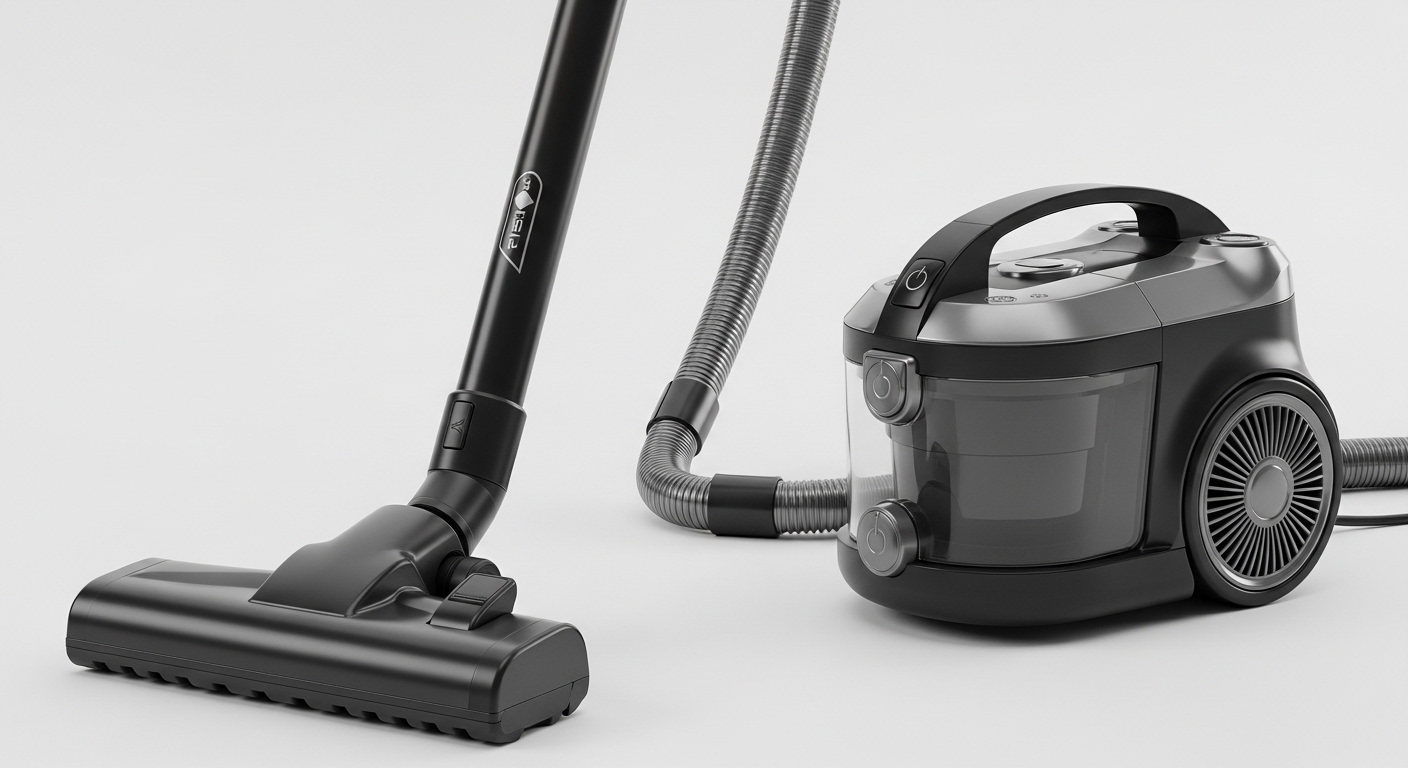
Canister vacuum cleaners
Best for: Hardwood, stairs, versatile cleaning
Canisters separate the motor and the dust bin, making them lighter to push and better for tricky spots.
Pros
- Easier on stairs
- Flexible attachments
- Generally lighter
Cons
- Takes more floor space for parts
If vacuuming stairs makes your arms ache, canister is worth a look.
Stick vacuum cleaners
Best for: Quick everyday cleaning
These are the lightweight, often cordless ones you grab for crumbs on the kitchen floor.
Pros
- Lightweight
- Easy to use frequently
- Good for quick jobs
Cons
- Smaller dust bin
- Sometimes weaker suction
Great as a daily go‑to, but maybe not your only vacuum if your home is large.
Robot vacuum cleaners
Best for: Hands‑off daily maintenance
Robots are charming, and they do keep floors tidy without your intervention. But they aren’t usually great at deep carpet cleaning or picking up big debris.
Pros
- Automated cleaning
- Works while you do other stuff
- Some map your home intelligently
Cons
- Often less powerful than handheld/ upright
- Needs regular emptying or a base that does it for you
Robot vacs are a supplement to traditional vacuums, not a full replacement for heavy duty jobs.
Real world examples — what you might actually choose
I’m not here to rattle off a list of product names like a robot. I’m talking about real decisions people make when choosing which is the best vacuum cleaner for their messy realities.
If you have pets
Pets = hair everywhere. Deep pile carpet + dog hair is the nightmare scenario. In tests, many consumers find that a vacuum with tangle‑free pet tools and strong suction makes a big difference. Those rotating rubber brushes are surprisingly critical because hairs get wrapped around skinny bristles like some kind of weird tent‑pole vortex.
If you have allergies
Bagged vacuums with HEPA filtration are often recommended because they trap allergens instead of throwing tiny particles back into the air. Sprinkle in vacuuming with a machine that seals its system well, and you’ve got less sneezing during or after cleaning.
If you just want speed
Stick or cordless vacuums win here. You grab it, you go. But — and this is important — if you skip deep cleaning for months because stick vacs feel too weak, you might just be putting off the inevitable big clean.
If you’re on a budget
Look for models that balance performance and cost. Often mid‑range machines with decent attachments and washable filters give the best value. The absolute cheapest units may feel like they barely move dirt at all.
Things people never talk about enough
There’s more to picking a vacuum than suction and specs.
Filter maintenance
If you never clean or replace a filter, your vacuum becomes less effective over time. Some models have washable filters, which is nice, but you gotta actually wash them — many people ignore this and then complain about loss of power.
Noise levels
Some vacuums sound like jet engines. If you’re sensitive to noise (or don’t want to scare sleeping babies or pets), this might matter more than any number on the box.
Warranty and repairs
Vacuums are mechanical. Motors wear out. Brushes break. A good warranty and easy‑to‑find parts can save frustration down the road.
So, what is the best vacuum cleaner?
Here’s where I sidestep the typical “Top 5” copycat write‑up. The truth is the best vacuum cleaner for you depends on what kind of messy person you are. Let’s outline some scenarios and the type that fits best:
- You’re a busy person who hates cleaning but wants decent floors: A robot vacuum with good mapping and a self‑emptying base as a daily driver, plus a stick or upright for deeper work.
- You live in a carpeted home with pets: A strong upright or canister with motorized pet tools.
- You’ve got mainly hard floors: A canister or stick with gentle bristles to avoid scratching.
- You care about air quality: A bagged model with true HEPA filtration.
The number one mistake is buying something because a review said “best of the year” without thinking about your floors, your lifestyle, and your cleaning muscles.
A quick checklist before you buy
Before you click “add to cart,” run through this:
- Does it clean the surfaces you actually have?
- Do you mind dealing with cords?
- Are attachments included and useful?
- Is maintenance simple or annoying?
- Do reviews from real owners match the marketing?
If you can answer those, you’re already ahead of most buyers.
Final thoughts
Asking “which is the best vacuum cleaner” is like asking “what’s the best tool for my mess?” There isn’t a single perfect answer for everyone, but there are perfect answers for you. The goal isn’t to find the most expensive or the flashiest; it’s to find the one that makes your daily life a bit less dusty, a bit less groan‑worthy, and a bit more done.
You’ll make a better choice by thinking about how you live rather than how a machine looks on a spec sheet. Once you do that, even cleaning — dare I say it — feels a little less dreadful.
Now grab a dust bunny and show it who’s boss.