

So, ya ever wondered how a vacuum cleaner actually sucks up all the dust without ever complainin’? Like you plug it in, push it around, and boom—your floor’s cleaner than your neighbor’s Instagram feed. But the thing is, beneath that simple hum and the whirring motor, there’s some kinda science magic happening that most folks never really notice. And lemme tell ya, it’s kinda fascinating once you peek inside.
The Heartbeat of a Vacuum: The Motor
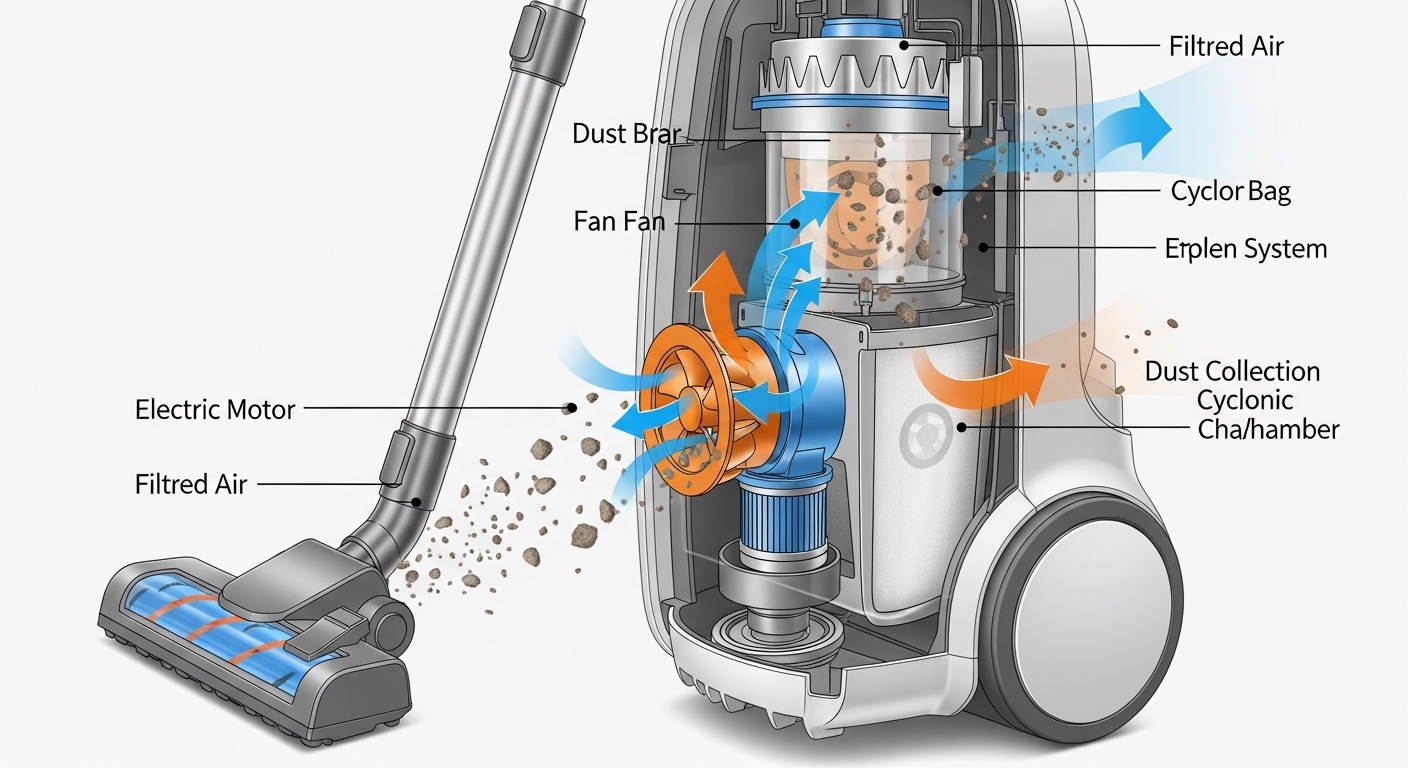
At the center of almost every vacuum cleaner is this little beast called the motor. Think of it like the heart of the machine, pumping life into all the hoses and brushes. Most home vacuums use an electric motor that spins really, really fast—sometimes tens of thousands of times per minute. That spin creates airflow, kinda like blowing air through a straw but reversed—the vacuum actually pulls air in. Now, it’s not just about brute force. The design of the motor, the way the fan blades are angled, and even the housing around it all work together to make a suction that’s strong enough to lift dirt, but not so strong that it tears up your carpet.
If you’ve ever tried a cheap knockoff vacuum and noticed it barely lifts dust, that’s usually a motor problem. Either it’s underpowered, or the airflow is messed up somewhere along the hose or filters. Fun fact, some commercial vacuums use motors up to 1200 watts, which is like having a tiny hurricane in your living room.
How Airflow Makes Dirt Move
Here’s the weird part most people don’t think about—vacuum cleaners don’t actually “suck” in the sense you might imagine. They create a difference in air pressure. When you switch the vacuum on, the motor spins the fan, lowering air pressure inside the vacuum’s dust chamber. Meanwhile, the air outside the vacuum is at normal pressure, so it rushes in to balance things out. That rush is what drags along dust, hair, and the occasional Lego piece hiding in the carpet fibers.
So next time you vacuum, remember: the floor isn’t being “sucked,” it’s more like air currents dragging debris into a tiny tornado chamber. And yeah, that’s why your vacuum stops working properly when the bag or filter gets clogged—because the airflow is blocked, and the pressure difference drops.
Bags vs. Bagless: The Debate
Vacuum cleaners come in two main flavors: bagged and bagless. Bagged vacuums use a replaceable bag to store dirt. They’re kinda neat ‘cause you just yank the bag out and toss it without touching any dust. The downside? If the bag fills too much, the airflow drops, and suddenly your vacuum doesn’t suck so well anymore.
Bagless vacuums, on the other hand, use a dust cup you empty manually. Cyclonic bagless vacuums spin the air inside to separate dirt from the airflow before it even reaches the filter. This spinning is called cyclonic separation, and it’s pretty clever—basically spinning dirt and air in a mini-whirlpool. Dyson popularized this tech, but the idea’s older than you’d think—patents for cyclonic vacuums go back to the 1920s.
Filters: The Unsung Heroes
Most people underestimate filters, but without ‘em, your vacuum is just a messy fan. HEPA filters, or High-Efficiency Particulate Air filters, are especially cool—they trap particles as tiny as 0.3 microns. That’s smaller than most bacteria. Hospitals use HEPA vacuums to keep sterile environments clean, so imagine that same tech in your living room.
Filters also protect the motor from dust buildup. If dust gets in there, it can overheat the motor and shorten the lifespan of your vacuum by years. Cleaning or replacing filters isn’t glamorous, but it’s like giving your vacuum a spa day—keeps it humming along nicely.
Attachments and Their Special Powers
You probably got a drawer full of vacuum attachments and wonder why some exist. Each is designed for a different kinda cleaning task:
- Crevice tool: For tight spaces, corners, and between sofa cushions.
- Dusting brush: Gently removes dust from delicate surfaces like blinds or keyboards.
- Upholstery tool: Wider, softer head to clean couches and chairs without snagging fabric.
- Motorized brush: Good for carpets, it agitates fibers to lift embedded dirt.
These attachments don’t just make vacuuming “fancy,” they actually optimize how air and debris move. Using the wrong attachment can drop suction efficiency dramatically.
Corded vs. Cordless: Tradeoffs You Might Not Think About
Cordless vacuums are super convenient—you can zoom from room to room without worrying about plug points. But here’s the catch: batteries limit runtime and often can’t deliver the same suction power as corded models. A corded vacuum can run at full strength indefinitely, which is why professional cleaners almost always stick with them.
The battery tech is improving, though. Lithium-ion batteries now allow cordless vacuums to reach up to 60 minutes of strong suction, which wasn’t even imaginable a decade ago. Still, if you’ve got a big house or heavy carpet, corded might be your best bet.
Real-World Examples: Sucking Power in Action
Let’s talk numbers. Modern vacuums can have airflow ranging from 50 to 150 cubic feet per minute (CFM) and suction pressures up to 200 air watts. For context, an air watt is a measure of how effectively a vacuum converts electrical power into actual dirt-lifting suction. Higher air watts usually mean better carpet cleaning.
Commercial vacuums in hotels or hospitals push even higher—sometimes over 300 CFM—to handle high traffic areas. And it’s not just carpets; hardwood, tile, and even car interiors benefit from different airflow designs. Car vacuums, for example, often use higher suction per square inch to tackle tight spaces.
Maintenance Tips You Probably Ignore
You might think vacuuming is enough, but without proper maintenance, your vacuum slowly turns into a paperweight. Some tips:
- Empty bags or dust cups regularly. Don’t wait ‘til it’s bursting.
- Clean filters monthly; HEPA filters can often be rinsed, just make sure they dry completely.
- Check the brush roll for hair and string; even a few feet of thread can cut suction.
- Inspect hoses for blockages; even small toys can create major airflow problems.
Treat your vacuum like a pet—it needs a little TLC or it starts misbehaving.
Innovations in Vacuum Tech
Vacuum cleaners have come a long way since the first motorized models in the early 1900s. Robotic vacuums are now common in households, using sensors and mapping tech to navigate rooms. Some even connect to apps for scheduling, though they usually don’t match the deep-cleaning power of a traditional upright vacuum.
Smart vacuums use LIDAR or camera mapping to avoid obstacles and remember room layouts. Cyclonic tech has gotten even more advanced, with multi-stage cyclones for better dirt separation. And noise reduction tech means modern vacuums are quieter than ever—some models operate around 60 decibels, which is like normal conversation.
Wrapping It Up
So, next time you’re dragging a vacuum across your living room, you’re not just cleaning—you’re witnessing a little engineering marvel. From the high-speed motor creating suction, to airflow physics, cyclonic separation, filters, and specialized attachments, every bit of tech works together to make your floors look nice. It’s easy to take it for granted, but when you really think about how all the moving parts interact, it’s kinda amazing.
Whether you’re team bagged or bagless, corded or cordless, a vacuum cleaner is one of those household gadgets that blends science and practicality in a way you almost never notice—until it stops working. And trust me, once it does, you’ll suddenly appreciate all that hidden tech you’ve been taking for granted all along.
In the end, understanding how a vacuum cleaner works isn’t just nerdy trivia—it helps you choose the right one, maintain it better, and maybe even vacuum smarter. And if you’re anything like me, you’ll never look at your living room floor the same way again.
This is why when people ask about vacuums, it’s not just “does it suck or not?”—it’s about understanding the tiny tornado you’ve got under your fingertips, every time you plug it in and turn that switch.