

So, you just got one of those steam vacuum cleaners and are staring at it like it’s some alien contraption, right? I get it, I’ve been there too—thinking, “Do I just pour water in here? Press all the buttons? Or will it explode?” The thing is, using a steam vacuum cleaner isn’t rocket science but it does have it’s quirks, and if you ignore them, you might just end up with a wet carpet that smells like a swamp.
Getting Started Without Freaking Out
First thing first, check your manual, but don’t freak out if it’s one of those 50-page booklets. Most steam vacuum cleaners work the same basic way: you fill a tank with water, sometimes add a lil’ bit of cleaner, wait for it to heat up, and then go to town on whatever floor or upholstery you got. But, here’s the kicker—different models have different heating times. Some heat up in two minutes, some in ten. I once waited like fifteen minutes thinking it was broken, and nope, just my impatience.
Most folks skip this step: emptying the tank from last time. If you leave old water in there, you can get this funky mildew smell. Nobody wants that, trust me.
Filling the Tank: Don’t Overdo It
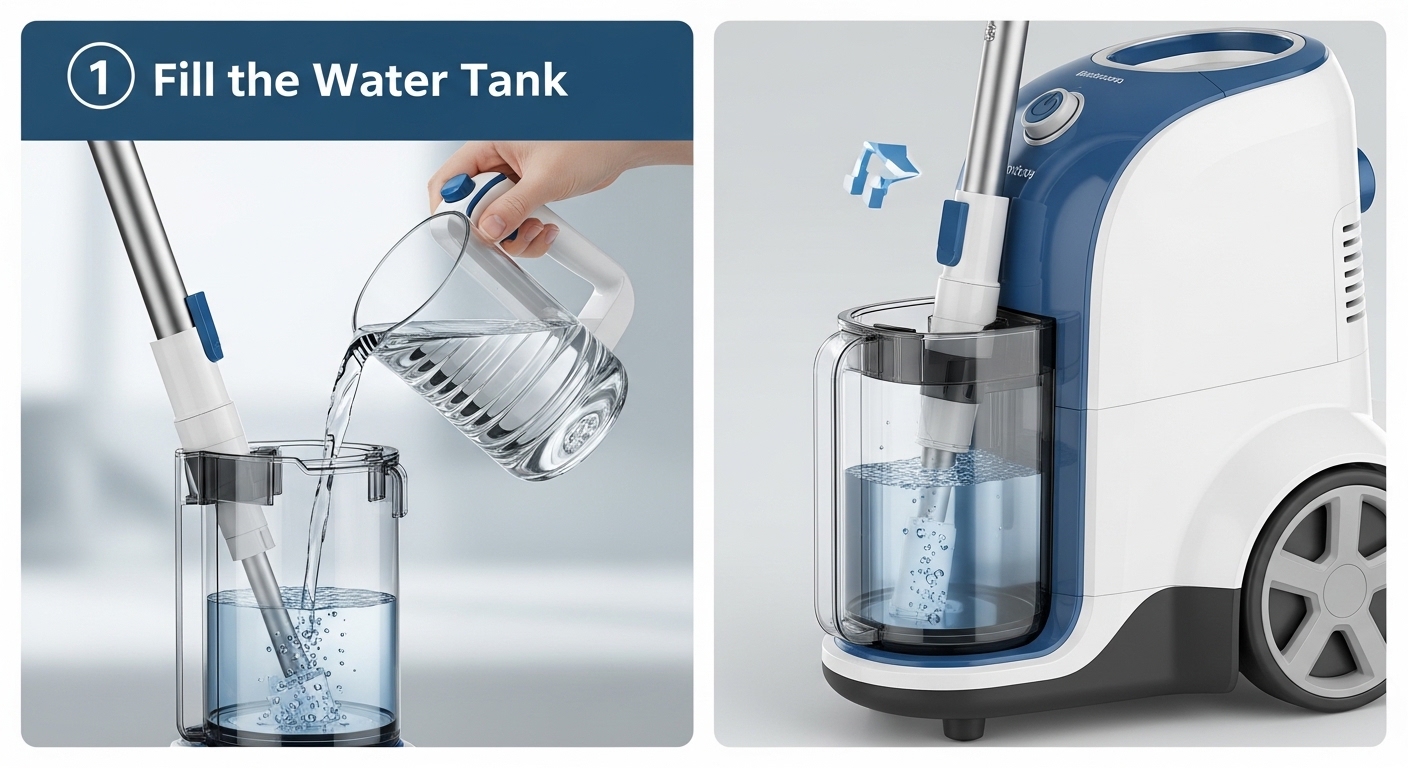
You might be tempted to just pour the water in recklessly. Don’t. Most steam vacuum cleaners have a max fill line for a reason. I’ve made the mistake of ignoring it once, and ended up with water gushing out when I tipped the cleaner. Not fun. Usually you’ll use tap water, but some high-end models recommend distilled to prevent mineral build-up. If you live in a hard water area, take it seriously. Scale deposits can ruin your machine faster than you can say “oops.”
Also, if your model allows adding detergent or floor cleaner, check the instructions. Too much and it leaves sticky residue. Too little, and you’re basically steaming dirt around.
Powering Up: Wait for the “Ready” Signal
Once your tank is filled, plug it in and press the power button. Most modern steam vacuum cleaners have a light or indicator that says it’s ready. Some beep, some glow. Don’t just assume it’s ready because you see steam; premature use can damage the heating element.
While it heats, it’s a good time to prep your cleaning area. Pick up small items, cords, toys—anything that could block the vacuum. If you’ve got rugs with tassels, be careful; the suction can snag them.
Actual Cleaning: The Magic Part
Here’s where you see why a steam vacuum cleaner is kinda miraculous. They not only suck dirt like a regular vacuum but also blast hot steam that sanitizes surfaces. Carpet, tile, even some upholstery—these things can do it all.
A good tip: don’t go over the same spot repeatedly while it’s still wet. Steam cleans best when the surface has a moment to work, and going over it too much can leave puddles. Move in slow, deliberate strokes, almost like painting. Some users like zigzag patterns, others straight lines—whatever feels natural, but don’t rush.
Upholstery and Delicate Surfaces
Not all surfaces are created equal. Leather, silk, certain synthetics—they hate too much heat and moisture. Many steam vacuum cleaners come with special attachments for couches, car seats, and curtains. Test a tiny corner first. You don’t wanna ruin a $500 sofa just to see if it cleans.
Also, the steam can sometimes loosen old stains better than scrubbing. But if it’s a really stubborn stain, you might still need a stain remover. Think of the steam as a prep step that softens dirt so your cleaner can actually lift it.
Maintenance: Treat It Like a Pet
Steam vacuum cleaners are kinda high maintenance. Empty tanks after every use, rinse filters if your model has them, and check nozzles for blockages. Some units have self-cleaning cycles—awesome—but don’t rely on them 100%. Periodic descaling is key if you live in a hard water area.
Here’s a weird little fact: even leaving a damp microfiber pad in the machine can lead to a smell that takes weeks to get rid of. So yeah, always dry your accessories separately.
Common Mistakes to Avoid
- Overfilling the tank: This causes leaks and sometimes electrical issues.
- Using the wrong attachment: A hard-floor nozzle on carpet is basically useless.
- Ignoring the manual: Seriously, even if it’s boring, skim it. Heating times, safety tips, and water recommendations matter.
- Rushing the cleaning: Steam cleaning isn’t like vacuuming. You can’t just push it around like a madman.
I’ve seen folks complain they wasted hundreds of bucks and still had dirty floors, but the issue is almost always improper use.
Extra Tips for Maximum Efficiency
- Move furniture carefully: Steam vacuums are heavy; dragging them around can scratch floors.
- Pre-vacuum if needed: On super dirty carpets, vacuum loose debris first. Steam won’t suck big chunks of dirt efficiently.
- Store properly: Coil cords loosely, keep the unit dry, and don’t store with water inside.
Some people even swear by adding a few drops of essential oils to the water for a fresh scent, but don’t overdo it; oils can damage rubber seals.
Real-World Benefits
A steam vacuum cleaner isn’t just a fancy vacuum. Studies have shown that hot steam can kill 99% of common household bacteria on floors and surfaces. Families with pets and kids especially notice reduced odors and cleaner carpets without harsh chemicals. And it’s surprisingly fast once you get the hang of it.
Plus, many modern models are surprisingly compact. You don’t need a dedicated closet; a corner in the laundry room often does the trick.
Troubleshooting: When Things Go Wrong
If your steam vacuum cleaner isn’t producing steam: check water level, heating time, and nozzle clogs. If suction is weak: check filters, empty tank, and attachments. If it smells weird: rinse everything and descale. Most issues are simple fixes, no need to panic.
One last weird tip I picked up: running the unit briefly on a tile floor before carpets can warm it up faster. Don’t ask me why it works, just trust the process.
Conclusion
Using a steam vacuum cleaner is kinda like learning a new dance. Awkward at first, but once you get your rhythm, your floors look spotless, smells fresher, and the whole house feels cleaner. Treat it right, follow the quirks of your model, and you’ll save time, avoid frustration, and maybe even find cleaning kinda…fun. And yeah, once you figure out how to use steam vacuum cleaner like a pro, you’ll wonder how you ever survived without one.
It’s not about pushing a button—it’s about understanding your machine, respecting the surfaces you’re cleaning, and letting steam do the heavy lifting while you watch, slightly amazed at how easy it really is.