

Man, if you’re staring at that dusty old vacuum cleaner in your closet wondering what on earth to do with it, you’re not alone. You’ve lugged it around for years, tried fixing it a couple times, maybe even duct-taped some wires together, and now it’s just… there. Taking up space, collecting dust (and maybe a little existential guilt), and you’re thinking, “How do I even get rid of this thing responsibly?” Yeah, disposing of old vacuum cleaner isn’t as simple as tossing it in the trash—especially if you don’t wanna feel like the planet’s yelling at you.
Why Just Throwing It Away Isn’t the Best Idea
So first off, tossing it in the regular trash? Not really the best. Vacuums got all sorts of bits inside—motors, cords, batteries in some cases, plastic parts, sometimes metal. All that stuff can be a pain for landfills to deal with, and honestly, it can leak yucky chemicals into the ground. The EPA notes that electronics, which vacuums kinda count as sometimes, are one of the fastest-growing trash problems in the US. People often underestimate how much damage even small appliances can do if not disposed properly.
Besides, think about your garbage truck guy… not that he’s judging you, but heavy clunky appliances can be a real hazard. Also, some cities have regulations about throwing electronics or appliances like vacuums in the trash. You could get fined a few bucks, which ain’t much, but still… why risk it?
Options to Dispose of Old Vacuum Cleaner
Here’s where things start to get interesting. You got multiple paths depending on how lazy, eco-conscious, or thrifty you feel that day.
1. Donate If It Still Works
Yeah, I know, “old” and “works” don’t always go together. But if your vacuum still kinda sucks up dirt (literally), consider donating it. There are thrift stores, shelters, or charities that take household appliances. Goodwill, Salvation Army, Habitat for Humanity ReStores—they all sometimes accept small appliances. Just make sure it’s clean and not falling apart. Nobody wants a vacuum with a cord that sparks like a mini fireworks show.
2. Sell or Give Away
Sometimes, one person’s junk is another person’s treasure. You can toss it on Craigslist, Facebook Marketplace, OfferUp… heck, even post it in local community boards. People looking for a cheap backup vacuum or someone learning to clean might scoop it up. Even if it’s broken, some people buy vacuums for parts. That’s right, your old belt, motor, or hose could still be useful to someone.
3. Take It to a Recycling Center
Now this is where you can feel extra responsible. Many recycling centers have sections specifically for electronics or small appliances. The trick is finding one that actually takes vacuums. You’d be surprised; some think they only take TVs or computers, but small appliances count. It gets disassembled, metals and plastics separated, sometimes batteries recycled separately. And yeah, your vacuum might not vanish overnight, but at least it’s not ending up in a landfill leaking god-knows-what.
Here’s a mini table for clarity:
| Disposal Option | Pros | Cons |
|---|---|---|
| Donation | Helps someone, keeps it out of landfill | Needs to be in working condition |
| Sell/Giveaway | Could make a few bucks, parts get reused | Time-consuming, may not sell |
| Recycling Center | Eco-friendly, responsible | Some centers charge a fee, location-dependent |
| Trash | Fast, simple | Bad for environment, might break local laws |
4. Curbside Pickup Programs
Some municipalities offer bulky item pickups. Call your city’s waste management or check their website. Some require scheduling, others have specific drop-off days. I’ve seen places where they’ll pick up old vacuums along with other appliances like microwaves, toasters, and coffee makers. Usually, they either recycle or safely dispose of them.
5. Retailer Take-Back
Believe it or not, some vacuum brands or big box stores have recycling programs. If you bought a Dyson, Hoover, Shark, or similar, check their websites. A lot of times, they’ll let you drop off your old vacuum when buying a new one. Some chains like Best Buy also have e-waste recycling bins for small appliances.
6. Disassemble and Recycle Yourself
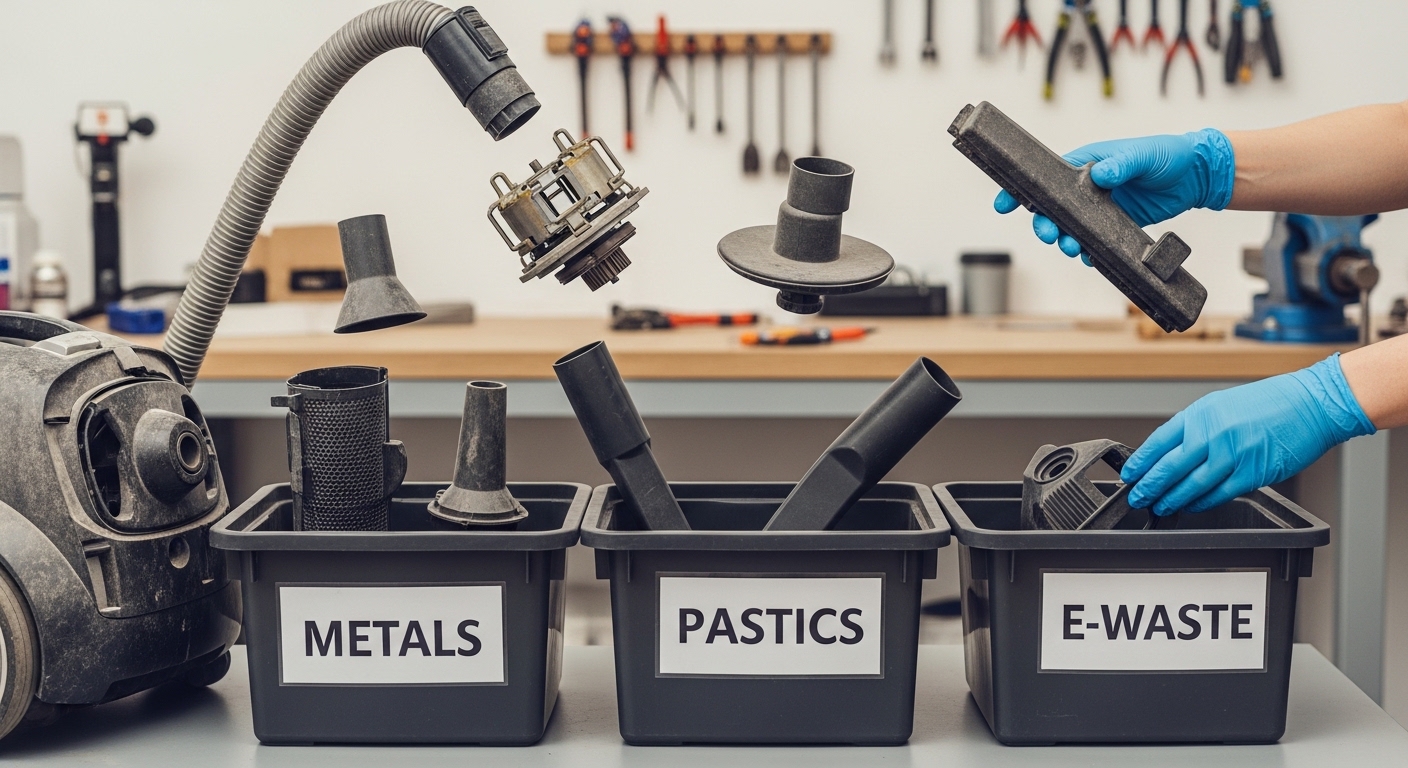
Okay, this one is a little hands-on, but if you’re up for it, you can take the vacuum apart and separate plastics, metals, and electrical components. Motors, belts, and cords can go to e-waste recycling. Plastic shells might go to certain local plastic recycling programs. It’s not for everyone, but if you got the tools and patience, it’s satisfying knowing exactly where each part goes.
Special Considerations
- Batteries: Some vacuums, especially cordless ones, have lithium-ion batteries. Never throw those in the trash. They can overheat and catch fire. Most electronics stores or recycling centers will accept them separately.
- Dust Bags & Contents: Empty out any dust, dirt, or pet hair before disposal. Don’t just shove it into a plastic bag and hand it off—it’s gross and can contaminate recycling streams.
- Warranty or Trade-In Programs: Sometimes you can get a small credit toward a new vacuum by returning the old one. Even if it’s old, worth checking.
Environmental Impact
I read a report by the Global E-Waste Monitor (2023) saying we produce over 50 million metric tons of e-waste every year. That’s insane, and small appliances like vacuums are part of that. Recycling metals, plastics, and electrical components saves energy, reduces mining demand, and keeps hazardous chemicals outta soil and water. So even though it’s just a vacuum, how you get rid of it kinda matters.
Real-Life Example
Take my neighbor, Carol. She had this clunky upright vacuum from like 2002. Tried selling it, nobody wanted it. She finally took it to a local recycling center. They pulled out the motor, wires, and plastics. The metal went for smelting, the plastics got recycled, and even the tiny screws were sorted. Felt kinda wild to see a machine that collected years of dust get transformed responsibly.
Quick Checklist for Disposing Your Vacuum
- Check if it still works → donate or sell
- If broken → check recycling options
- Remove batteries → recycle separately
- Empty dirt and debris → prevent contamination
- Research local regulations → avoid fines
- Consider manufacturer take-back programs → maybe get credit
Bottom Line
Disposing of old vacuum cleaner doesn’t have to be stressful or confusing. It’s about knowing your options—donate, sell, recycle, or manufacturer programs. And yeah, sure, tossing it in the trash might be easiest, but thinking a little about where it goes matters. You can keep your space clean, and the planet a bit cleaner too. That clunky vacuum might be gone from your closet, but the way you dispose it leaves a mark, just not on your carpet.
So next time you see that dusty old vacuum staring at you, don’t sigh and shove it behind the couch. Pick a method, do a tiny bit of legwork, and it’ll vanish responsibly. Plus, you might feel kinda smug knowing you didn’t just add another problem to the landfill pile.
Disposing an old vacuum might not be glamorous, but hey, somebody’s gotta do it—and now you’re ready.