

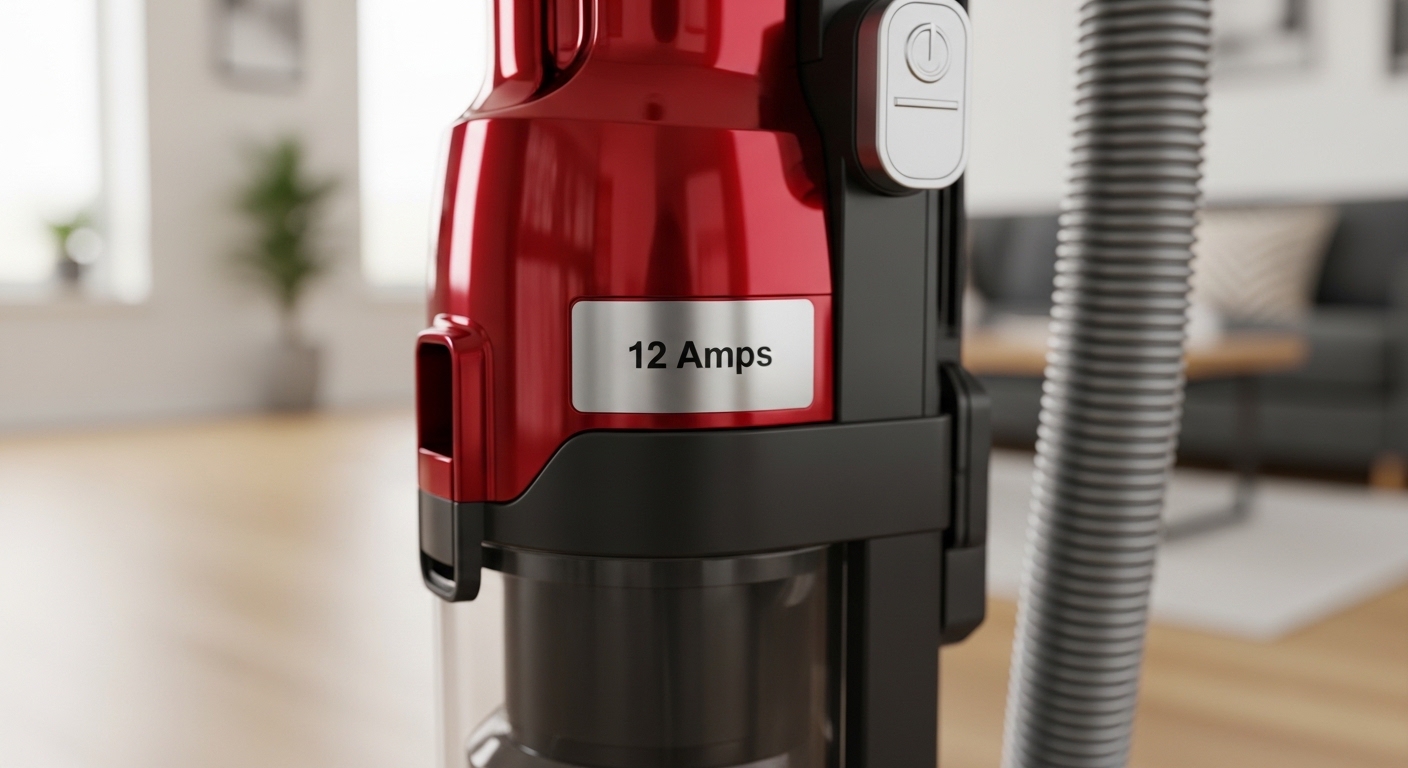
You ever plugged in your vacuum cleaner and kinda stared at it, wondering just how many amps it’s actually drawing? Yeah, me too, like why does it feel so powerful sometimes and barely get the crumbs off the rug other times. I was snooping around a couple of manuals and some forums, and turns out, the answer isn’t as simple as just one number. Depending on the type, brand, and even the floor you’re vacuuming, a vacuum cleaner can pull a surprisingly wide range of amps.
Why Knowing the Amps Matters
So, you might be asking, why even bother knowing the amps? Well, for starters, your home’s circuit breakers are real picky. If your vacuum pulls too many amps, and you’re running a few other appliances at the same time, boom—you trip the breaker. It’s not just an inconvenience; it can also stress the wiring if you’re constantly overloading a circuit.
Another reason is efficiency. Some vacuum cleaners look beefy but actually suck a modest amount of amps, while others are compact but draw a heavy load. This is why manufacturers sometimes list wattage instead of amps, which can be confusing. But the general rule is: if you know the amps, you can roughly figure out how much power it’s consuming and whether your outlets can handle it safely.
Average Amps in Home Vacuum Cleaners
Most standard upright or canister vacuum cleaners in the U.S. are in the ballpark of 6 to 12 amps. But here’s the kicker: that’s a pretty rough range. For example:
- Lightweight stick vacuums: usually 3–6 amps. They’re designed for carpets that aren’t super thick and quick pickups.
- Standard upright vacuums: about 7–12 amps. This includes the big brands you probably see everywhere—Dyson, Hoover, Bissell, etc.
- Wet/dry shop vacuums: 10–14 amps. These are the real beasts, meant to suck up water, sawdust, and whatever else you throw at them.
You see, the size of the motor and the vacuum’s intended purpose are huge factors. A tiny 2-amp stick vac will hardly make a dent in thick shag carpet, but a 12-amp upright will practically make your rug disappear.
How Voltage Affects Amps
Now, amps don’t exist in a vacuum—pun intended—without considering voltage. Most homes in the U.S. have 120V circuits, so the amps drawn are a function of the wattage divided by voltage. For instance, a 1200-watt vacuum on a 120V outlet would draw about 10 amps. But in Europe or other countries using 220–240V, the same vacuum would draw fewer amps, maybe around 5–6. So if you’re traveling with your vacuum or buying one abroad, the local voltage really changes the amp load.
Real-Life Examples of Amps in Popular Vacuums
I dug a little deeper and found some numbers that actually make sense:
- Dyson V11 – about 6 amps on max mode. Not bad for a cordless stick that does hardwood and carpet.
- Hoover WindTunnel T-Series – roughly 11 amps. This one’s a classic upright, really strong suction.
- Shop-Vac 5-gallon wet/dry – around 10 amps. Handles both debris and liquid spills like a champ.
It’s kinda eye-opening, right? You wouldn’t think that a stick vacuum can pull more than half the amps of a big upright, but that’s the way efficiency and motor design play out.
Amps vs Watts: What’s the Difference?
Here’s where things get a lil messy. Amps are basically the amount of electric current flowing, while watts measure the actual energy consumed over time. People often see “1200 watts” on a box and assume it’s super powerful, but wattage doesn’t directly tell you how hard the vacuum cleans—efficiency matters a lot.
You can calculate amps from watts easily though:
Amps = Watts ÷ Voltage
So, for a 1200-watt vacuum on 120V: 1200 ÷ 120 = 10 amps.
But remember, actual amps drawn can vary depending on suction settings, attachments, and even how clogged the filter is. A vacuum struggling against thick carpet or a full bag may draw slightly more amps than a vacuum gliding across bare wood.
High Amp Vacuums: Are They Always Better?
Not necessarily. A higher amp rating usually means a more powerful motor, but it also means higher electricity usage and potentially more noise. Some vacuums with clever designs use fewer amps but still deliver excellent suction thanks to cyclonic technology or airflow optimization.
Also, if your circuit breaker is weak or you have old wiring, a 12–14 amp vacuum can be risky if you’re running a microwave or a hair dryer at the same time. Safety first, right?
Tips for Managing Amp Load
If you’re curious about managing your vacuum’s amps, here’s a few practical tips:
- Avoid plugging multiple high-amp appliances on the same circuit.
- Use your vacuum at lower power modes if available to reduce amp draw.
- Check the vacuum’s plug and cord for overheating, which can indicate over-amp conditions.
- Consider a dedicated circuit for really heavy-duty vacuums, like wet/dry shop vacs.
Cordless Vacuums and Amps
Cordless vacuums are a whole other ball game. They don’t list amps the same way because they run on batteries, but the same principle applies: more current draw = faster battery drain. For example, a high-performance cordless stick can pull 20–25 amps from its battery momentarily to hit max suction. It’s insane when you think about it, but that’s why runtime drops when you crank the suction.
Commercial and Industrial Vacuums
If you’re stepping up to commercial spaces, like cleaning offices or warehouses, vacuums can draw even more amps—sometimes 15–20 on a 120V line. These aren’t just about suction; they need endurance for hours of continuous use. And don’t even get me started on the 240V industrial vacs; they pull fewer amps because voltage is higher, but the suction is monstrous.
Quick Reference Table
| Vacuum Type | Typical Amps | Notes |
|---|---|---|
| Lightweight stick | 3–6 | Best for quick pick-ups |
| Standard upright | 7–12 | Most household models |
| Wet/dry shop vac | 10–14 | For heavy debris and liquids |
| Cordless (max mode) | 20–25 (battery amps) | Drains battery fast |
| Commercial/industrial | 15–20 | High endurance and suction |
The Bottom Line
So, how many amps is a vacuum cleaner? Well, it really depends on the type, brand, voltage, and what you’re cleaning. Most household vacs will sit in the 6–12 amp range, while heavier-duty models and shop vacs can pull 14 amps or more. Cordless vacs don’t show it on a wall outlet, but they can pull crazy high amps from batteries when maxed out.
Understanding amps isn’t just a numbers game; it’s about knowing what your vacuum can do safely without blowing a fuse or overloading your home circuits. Next time you plug in your vacuum and wonder why your lights flickered a bit, you’ll know it might just be that amp-hungry motor doing its thing.
It’s kinda comforting knowing that with a little awareness, you can vacuum smarter, not just harder. Knowing the amps gives you control, saves you electricity, and might even extend the life of your vacuum. And hey, you get to impress friends by casually mentioning, “Oh, my vacuum pulls 10 amps—don’t try that on a weak circuit.”