

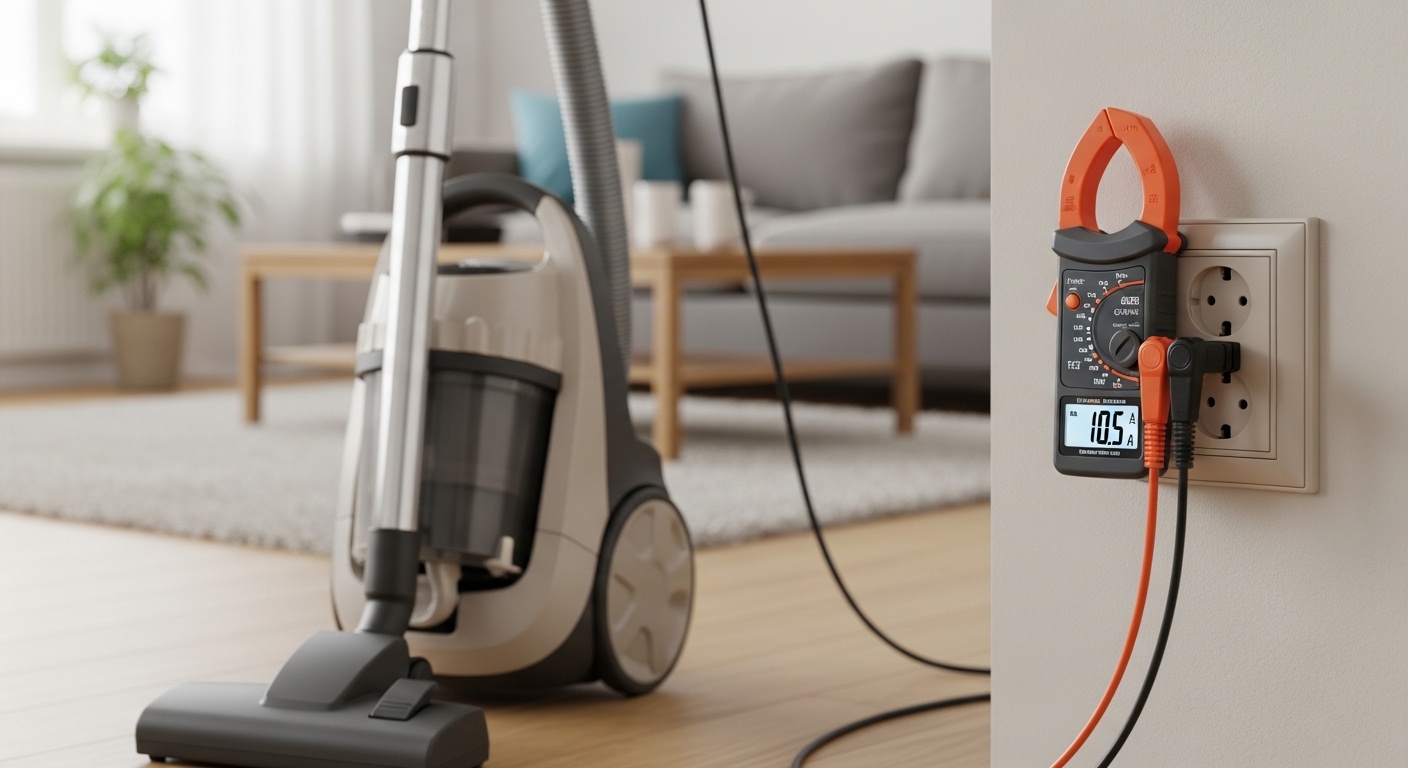
You ever stared at the back of your vacuum cleaner, squinting at that tiny tag that’s supposed to tell you how many amps it uses, and thought, “well… that ain’t making any sense”? Yeah, me too. I mean, some vacuums out there are like, tiny little wimpy things, and others feel like they could suck the socks right off your feet. So, figuring out how many amps a vacuum cleaner uses isn’t as straightforward as you’d think. There’s like a whole mix of volts, watts, amps, and sometimes the numbers on the box barely make sense unless you’re a geek who memorizes formulas for fun. But don’t worry, I got you, we’ll break it down so you’ll actually get it, without needing to pull a calculator out and start crying.
What Amps Really Mean for Your Vacuum
So first off, when you see the amperage rating on your vacuum, it’s basically telling you how much electricity the motor is pulling from your wall socket. Not how strong it is, not how fast it cleans, just the actual electric draw. A lot of people confuse this with suction power — they see a vacuum that’s 12 amps and think it’s somehow magically cleaning better than the 8-amp version. That ain’t always true. Amps are more about energy consumption than performance, even if they sorta correlate.
Most household vacuums are between 6 and 12 amps, but some fancy shop vacs and commercial vacs can hit like 15 amps. Yeah, that’s enough to trip a circuit if you’re running a bunch of other stuff on the same line. And that’s something you kinda gotta watch out for. A vacuum that eats 10 amps isn’t gonna wreck your house, but it’s not exactly sipping electricity either.
Why Amps Fluctuate During Use
Here’s a thing: amps aren’t always constant. When you’re vacuuming over bare floors, your vacuum might be drawing less current than when you’re dragging it over thick carpet, or sucking up a pile of dog hair that’s basically a new species at this point. The motor works harder, so it draws more amps. Think of it like your vacuum lifting weights — heavier stuff, more effort, more juice.
Even the type of vacuum makes a difference. Canister vacs often pull fewer amps than upright vacs because of the way their motors are designed. And cordless vacuums? They’re all over the place, depending on the battery. Some of those little handheld suckers can pull like 5 amps at peak, but they won’t do it for long without dying.
Table of Average Amps by Vacuum Type
| Vacuum Type | Typical Amps | Notes |
|---|---|---|
| Upright (standard) | 8-12 amps | Most common in homes |
| Canister | 6-10 amps | Quieter, often more efficient |
| Handheld/Cordless | 4-8 amps | Peak amps are short bursts |
| Shop Vac | 10-15 amps | Industrial/commercial, heavy-duty |
See, this table gives you a rough idea, but there’s always exceptions. Some older uprights can hit like 13-14 amps because they’re beasts from the past, and some “eco-friendly” modern ones barely break 6 amps while still cleaning decently.
How Amps Affect Your Electricity Bill
Ok, so you’re wondering, “great, my vacuum uses 10 amps… what does that mean for my bill?” Honestly, not as much as you might freak out about. Amps tell you current, but electricity companies charge by kilowatt-hours (kWh), which is basically volts × amps × time. A 10-amp vacuum running for 30 minutes might cost you… let’s see, roughly 0.2–0.3 kWh. At average US rates, that’s like 3–4 cents. Not exactly going to make you cry when the bill comes.
But here’s a trick: if you’re running a high-amp vacuum while other heavy appliances are on the same circuit, you might trip breakers. That’s the main practical reason to care about amps — making sure your circuits aren’t overloaded.
Real-World Examples
I did some digging around a few popular models:
- The Dyson Ball Animal 2 (yeah, that one that always scares you with the cord) pulls about 12 amps. Suction? Ridiculous. Electricity usage? Meh.
- Shark Navigator Lift-Away clocks in around 10 amps. Very middle-of-the-road. Not gonna blow a fuse unless your toaster is running at the same time.
- Shop vacs like the 5-gallon Ridgid can hit 13 amps. Definitely respect the breaker on that one.
What’s interesting is that some newer “high-efficiency” vacuums use less amps but maintain strong suction thanks to brushless motors and clever airflow design. So, don’t just assume more amps = more cleaning power.
Tips for Managing Vacuum Amp Load
- Don’t run multiple high-draw appliances on the same circuit. Your vacuum and a hair dryer together? Recipe for a tripped breaker.
- Consider your outlets. Older houses sometimes have circuits rated only for 15 amps. That 12-amp vacuum plus lights and the fridge? Can be risky.
- Use energy-efficient models. Some vacuums are designed to maximize suction while keeping amps low, so you save a bit on electricity.
- Cordless as a backup. These usually draw less current, but battery life limits their runtime. Handy for quick cleanups.
How Amps Compare to Watts
Sometimes you’ll see wattage instead of amps, and that’s confusing too. Watts = Volts × Amps. In the US, standard voltage is about 120V. So a 10-amp vacuum would roughly be 1200 watts. Not a perfect science, because motors aren’t 100% efficient and there’s a starting surge, but it’s close enough for general understanding.
So basically, amps are the more “raw” number, watts tell you actual power consumption, and suction is… well, a different story. Manufacturers love to throw around watts, because it sounds impressive, but amps are what you care about when thinking circuit capacity.
Odd Facts You Probably Didn’t Know
- Some vacuums can briefly draw double their rated amps on startup. That’s why you sometimes see lights flicker when you first plug in a heavy-duty vacuum.
- Older vacuums often used carbon brushes, which made amps fluctuate wildly as they wore down. Newer brushless motors are much steadier.
- The longest-running vacuum marathon on a single amp draw? Not widely reported, but some commercial units run 12–14 amps continuously for hours in factories. That’s like the Terminator of vacuuming.
Final Thoughts
Knowing how many amps a vacuum cleaner uses isn’t just nerd trivia. It helps you pick the right model for your house, protects your circuits, and gives you a little bragging power when someone asks why your vacuum never trips the breaker while theirs does. And yeah, it also helps you make sense of the numbers on the tag, instead of staring at them and feeling dumb.
So next time you’re vacuuming, you can think to yourself: “This 10-amp little monster is sucking up dust like a champ without draining the house.” Or, if you’re feeling fancy, you can do some math and calculate how much electricity you just used. Either way, you’ll know exactly what’s happening behind the scenes, and that’s kinda satisfying, isn’t it?
Understanding amps is like peeking behind the curtain. You realize it’s not magic, it’s just electricity doing its thing, and your vacuum is the humble servant making your floors slightly less of a hazard zone.
Would you like me to make a small quick-reference guide for vacuum amps by popular models? It could be super handy if you’re shopping or comparing.