

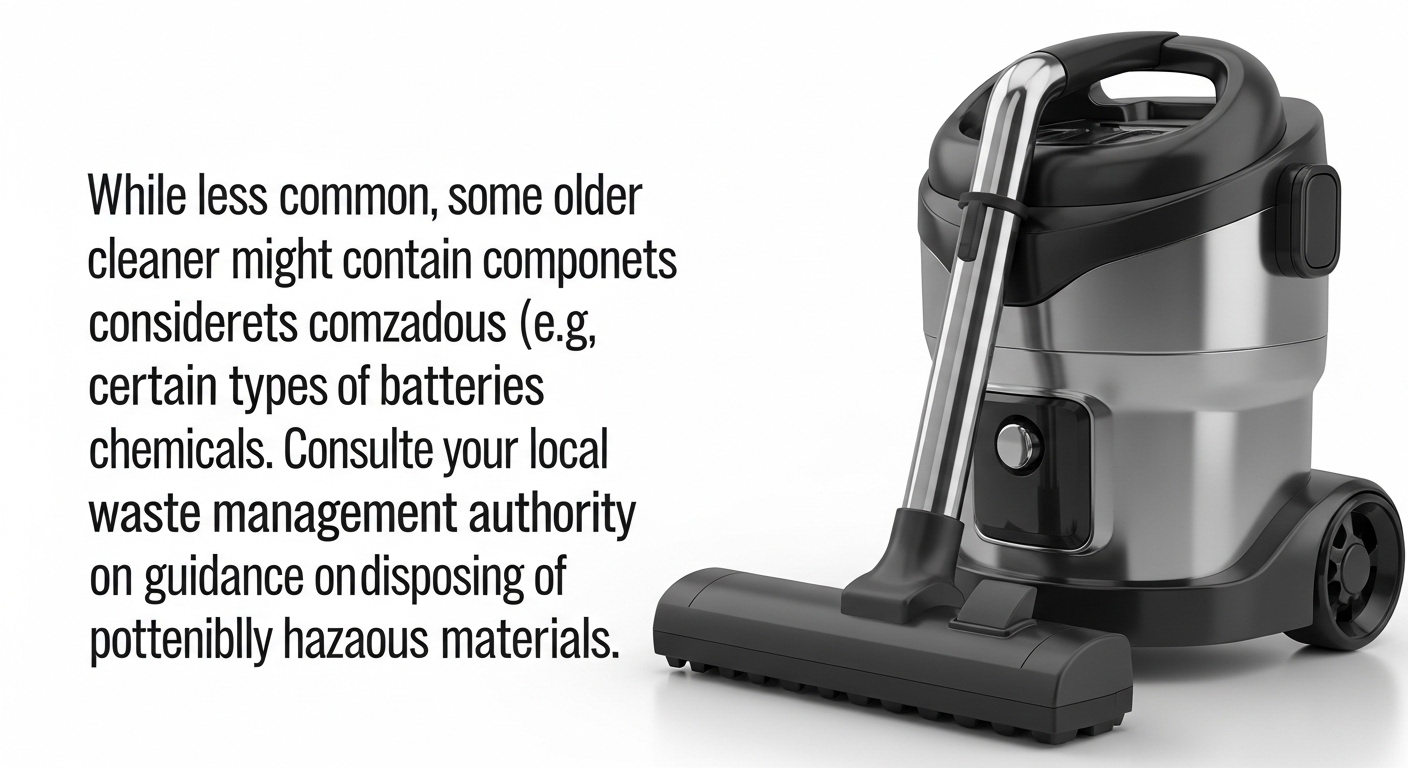
So, you’ve got this old vacuum cleaner sittin’ in the corner, hummin’ less than it used to, or maybe it just croaked completely, and you’re staring at it like, “Now what the heck do I do with this thing?” Yeah, you’re not alone. I’ve been there too, tryin’ to figure out how to dispose vacuum cleaner without just tossin’ it in the trash and feelin’ guilty ‘bout the planet. It’s not just about chuckin’ some old plastic and wires; vacuums have parts that can actually be recycled, if you know where to take ‘em.
Why You Can’t Just Trash It
Lotsa folks think, “Eh, it’s old, just toss it,” but that’s not the best move. Vacuum cleaners usually got metals, plastics, sometimes even small electronics in ‘em. When they hit the landfill, metals can leach, plastics stick around for like forever, and electronics break down slowly but nasty. According to the Environmental Protection Agency, in the U.S. alone, e-waste has grown by about 21% in the last five years, and old appliances like vacuums count in that. So, just throwin’ it away? Not ideal.
Also, some vacuums have batteries—especially cordless ones. Lithium-ion or NiMH batteries can be a real hazard if punctured, so you gotta treat ‘em special. That’s why knowing how to dispose vacuum cleaner properly isn’t just a ‘greenie’ thing; it’s a safety thing too.
Check the Manual or Brand Programs
Before you start breakin’ stuff apart, sometimes the easiest way is checkin’ the manual or the brand’s website. Lots of big brands—like Dyson or Shark—have recycling programs where you can send your vacuum back, and they’ll handle it. Dyson, for example, has a take-back program in certain countries that ensures the unit gets properly dismantled and metals/plastics separated. It’s kinda like giving your vacuum a dignified retirement instead of dumpin’ it willy-nilly.
Even smaller brands might have local partnerships with e-waste recyclers. It doesn’t hurt to call ‘em up. You might get a surprise and not have to pay a thing.
Local E-Waste Collection Points
If brand programs aren’t an option, your city probably has a solution. Most municipalities now have e-waste recycling points or “special collection days” where you can drop off appliances. Some bigger cities have permanent collection centers that take vacuums, toasters, printers, and other electronics.
Here’s how you can handle it step-by-step:
- Locate your nearest e-waste center or municipal drop-off
- Remove all bags, dust, and filters from the vacuum
- If it’s cordless, take out batteries separately (check local battery recycling rules)
- Drop it off and get a receipt if available
Fun fact: Some recycling centers will actually pay you a few bucks for scrap metal. So that old vacuum could give you like, a tiny reward, kinda cool right?
Donate If It’s Still Kinda Working
Now, before you go full “recycle or bust,” consider if your vacuum still sorta works. Lots of charities, thrift stores, or even local shelters might take it. Habitat for Humanity ReStores, Goodwill, and local Facebook Marketplace freebie groups sometimes accept slightly used vacuums.
Even if it’s not perfect, some places fix it up or salvage parts. You might be surprised how many people actually need a cheap vacuum for a small apartment. So, donating is not only greener, but it’s also helping someone out in a way that just tossing it wouldn’t.
Sell Parts or Scrap
If you’re the kinda person who likes tinkering, you can dismantle the vacuum and sell parts. Motors, belts, screws, even the plastic housing can have value. Websites like eBay or specialized e-scrap dealers often buy old appliance parts.
A quick tip: Take careful pics, label the parts, and check if the motor’s brush assembly is still good. Some folks buy old motors just for practice or hobby projects. Even a broken vacuum can pay off more than you think, ‘specially if it’s a brand name unit.
DIY Recycling at Home
If you’re feelin’ extra crafty and careful, some stuff you can recycle at home:
- Metal parts: screw off and put with scrap metal
- Plastic shells: check local codes, some plastics go in special recycling bins
- Filters & dust bags: these usually go in normal trash unless they’re washable
- Batteries: never throw in trash, take to battery recycling
Just make sure you’re careful with wires and motors—don’t slice open a battery or anything. A little common sense goes a long way here.
Common Mistakes People Make
- Throwing batteries in trash – like mentioned, lithium-ion batteries can spark and cause fires in landfill trucks.
- Ignoring manuals – sometimes brands offer take-back that’s free and easy.
- Not cleaning the vacuum first – dust and debris can make it messier for recycling centers.
- Assuming donation isn’t an option – even a mostly broken vacuum can sometimes be fixed.
It’s easy to overlook these things when you’re in a hurry, but they really make a difference.
Environmental Impact
Let’s get real—disposing vacuums properly matters. The metals, plastic, and electronics can all get reused instead of polluting. According to a study by the United Nations University, recycling just one ton of electronics can recover around 200–400 kilograms of copper, 1–2 kilograms of gold, plus other metals. Even a small household vacuum might not have gold in it, but it’s the same principle: every bit counts.
If you throw it in the landfill, those plastics take centuries to break down, and the electronics can leak toxic chemicals. So it’s not just about doing the right thing—it’s literally about keeping your backyard (and the planet) cleaner.
Step-by-Step Quick Guide
Here’s a condensed version for easy rememberin’:
- Check if the vacuum still works; donate if possible.
- Remove all bags, dust, and filters.
- Separate batteries and hazardous components.
- Check brand take-back or manufacturer recycling program.
- Locate your local e-waste collection point.
- Drop off responsibly.
- Optional: salvage parts or metals for resale or DIY reuse.
Following these steps usually takes minimal effort, and you can feel kinda proud knowing you didn’t just toss a piece of electronics into oblivion.
Final Thoughts
Knowing how to dispose vacuum cleaner properly isn’t rocket science, but it does take a little thought. You got options: donation, brand take-back, municipal e-waste programs, or DIY recycling. The key is not just throwin’ it out blindly. And hey, a little planning means your old vacuum can either help someone else, get recycled responsibly, or even net you a few bucks if you’re clever.
So next time you’re staring at that dusty, cranky old machine, don’t sigh and dump it. Take a couple minutes, do it right, and you’ll not only declutter your space but also do a tiny but real favor for the environment. And honestly, there’s somethin’ satisfying about knowing your vacuum didn’t just end up rotting somewhere; it got a proper send-off.
This might be one of those small adulting victories nobody claps for, but hey, it counts. You just leveled up in the “responsible vacuum disposer” game.