

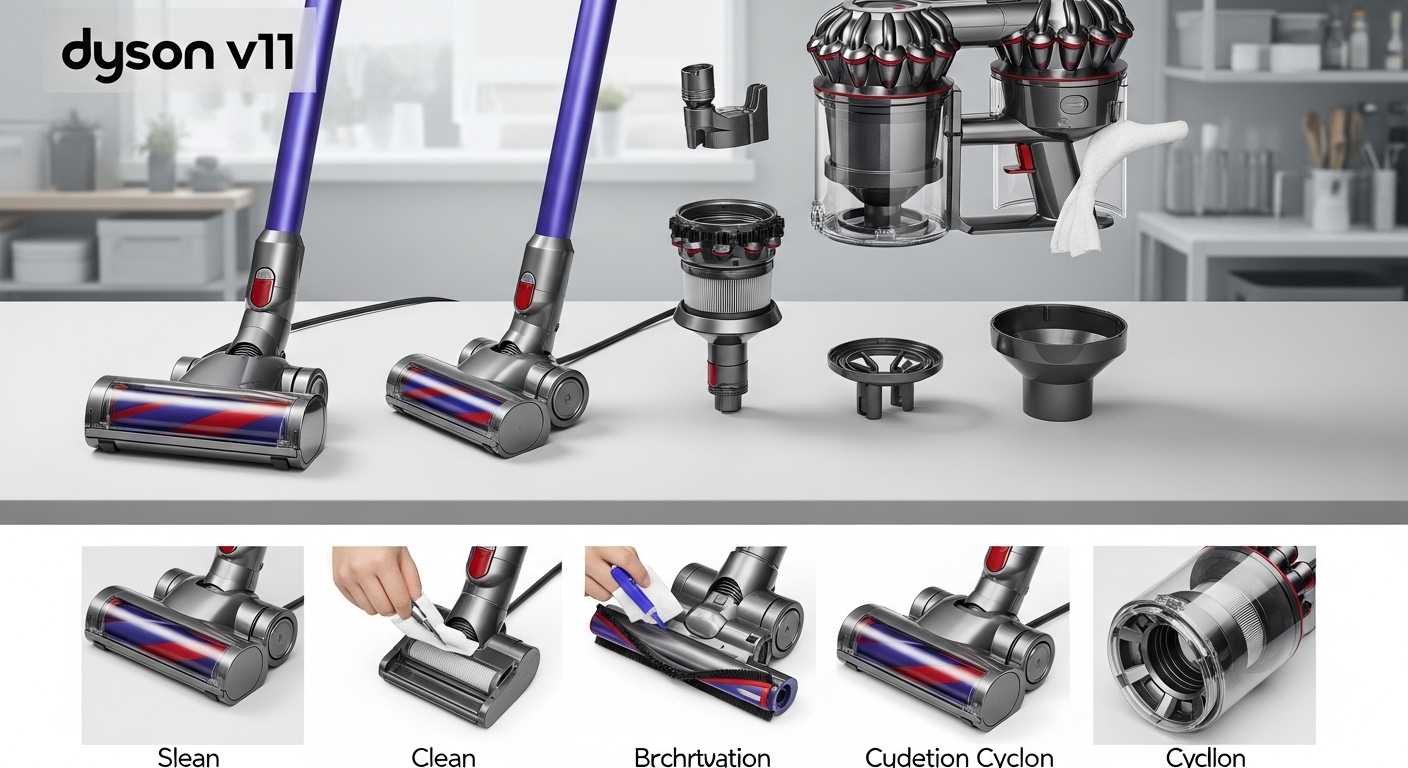
So, you’ve got your Dyson vacuum cleaner all humming along nicely one minute, then the next thing you know it’s sounding like a dying lawnmower and barely picking up crumbs off the rug. Yeah, I’ve been there, and lemme tell ya, cleaning a Dyson vacuum cleaner isn’t just “rinse and go” like your old plug-in. It’s a lil’ more… fiddly, but once you get the hang of it, your machine’ll feel brand spanking new again.
Why Cleaning Your Dyson Actually Matters
You might think, “Eh, it still sucks up dust, why bother?” But here’s the thing: Dyson vacuums are these sleek, powerful little engines that rely on airflow and filters to do their magic. If you clog a filter or ignore the cyclone bin for months, you’re basically turning your fancy gadget into a glorified paperweight. Dyson claims that a dirty filter can reduce suction by up to 25%, which honestly sounds low when you notice the difference—trust me, you’ll feel it.
Cleaning doesn’t just improve suction, it also keeps the thing from smelling like wet dog after a rainy week. And for allergy sufferers, this is non-negotiable—those little HEPA filters trap pollen and dust that you really don’t wanna be breathing back into your living room.
Tools You’ll Need (Hint: Not Much)
Good news: you don’t need some elaborate cleaning kit. Most of this is stuff you already got at home. Here’s a list:
- Warm water (not boiling, don’t scorch your plastic)
- Mild detergent or dish soap
- A soft brush or old toothbrush
- Microfiber cloth
- Scissors (for those hair tangles in the brush bar)
- Compressed air (optional, but handy for stubborn dust in nooks)
That’s literally it. Dyson designed these things to be user-serviceable, so no fancy tools required.
Step 1: Unplug and Disassemble
Okay, first, safety stuff. Unplug your Dyson vacuum cleaner. I know, duh, but sometimes when you’re in a hurry you just yank the cord and forget. Don’t do that. Then, start with the obvious parts:
- Remove the wand or stick
- Detach the cleaner head
- Pull out the dust bin
Dyson bins usually just pop out with a press of a button. Some models like the V11 or V15 have a twist-off system—just follow your model’s manual, but mostly, it’s very intuitive.
Step 2: Empty the Bin and Wash
So, the bin. You probably think shaking it over the trash is enough, but nope, it’s more than that. Dump all the dust, crumbs, and random Lego pieces (I swear, these things multiply). Then, rinse the bin with warm water. Don’t use detergents in every model; some Dysons only want plain water.
- Tip: Let the bin dry completely before reassembling. Moisture in there can wreck the motor. I usually leave mine overnight.
Step 3: Cleaning the Filters
Dyson filters are kinda famous for being washable but also finicky. Most models have two filters:
- Pre-motor filter: usually foam or mesh
- HEPA filter: captures microscopic dust
Take them out and rinse under cold or lukewarm water. Don’t use soap unless Dyson’s manual explicitly says so. Squeeze gently, don’t wring. And here’s a golden rule: leave them to air dry for at least 24 hours. Yes, a full day. Trying to use a damp filter is basically asking for moldy air and bad smells.
- Pro tip: every 1-3 months depending on use, repeat this. Heavy shedding pets? Maybe monthly.
Step 4: Brush Bar TLC
The brush bar is where all the hair tangles live, and boy, do they pile up.
- Remove the brush bar (usually a button or twist mechanism)
- Use scissors to cut long hair strands
- Brush off remaining dust and debris
- Wipe down with a damp cloth
If your Dyson’s suction has been weak but filters are clean, 90% chance the brush bar is the culprit.
Step 5: Check the Hose and Attachments
Don’t forget the hoses. People often ignore these. A stuck sock or dust boulder can silently choke the suction.
- Detach the hose
- Shine a light through it
- Push a flexible brush or a long stick to clear clogs
- Wipe outside with a microfiber cloth
Attachments like crevice tools or motorized mini heads? Same deal. Wipe, rinse if plastic, make sure they’re dry.
Step 6: Reassemble and Test
Once everything is dry (bin, filters, brush bar), put it back together. Don’t rush this. A half-dry filter or improperly seated brush bar can make the vacuum act weird.
- Reattach filters
- Snap the bin in
- Click in the brush bar
- Plug in and turn on
If it’s humming smoothly and sucking like new, you’re a Dyson cleaning hero.
Common Mistakes People Make
Let me tell ya, some people do this wrong and then wonder why their vacuum smells or sputters:
- Using soap on HEPA filters – can ruin the filter
- Reassembling too soon – damp parts = funky smell + mold
- Ignoring hair buildup – it’s like trying to run with shoes full of sand
- Forgetting small hoses – even a tiny blockage can cut suction
Maintenance Tips to Keep It Running
- Clean filters every 1-3 months
- Empty bin after every vacuum session
- Check brush bar for tangles weekly if you have pets
- Avoid sucking up liquids unless your model is wet-dry capable
- Store in a dry place, not a damp closet
Following these small habits can extend your Dyson’s lifespan by years. Some users report their vacuums running strong for 10+ years with proper care.
Real-World Example
I had a friend with a Dyson V8 (yeah, one of the older models). She ignored cleaning for almost a year. The suction got so weak that it barely picked up pet hair. After a full deep clean—bin, filters, brush bar, and hose—it felt like a brand new machine. Dyson claims that regular cleaning keeps the warranty intact, so it’s not just about performance, it’s also about insurance on your investment.
FAQ About Dyson Cleaning
Q: Can I put the Dyson parts in the dishwasher?
A: No, never. Heat warps plastic and ruins filters. Stick to warm water and gentle hand wash.
Q: How often should I clean the brush bar?
A: Weekly if you’ve got pets, monthly if you’re dust light.
Q: My Dyson still smells after cleaning, what gives?
A: Check for trapped hair or dust in the hose or bin crevices. Sometimes the brush bar bearing gets greasy.
Q: Can I use vinegar or chemicals on the filters?
A: Nope, stick to water. Chemicals can destroy the filtration efficiency.
Conclusion
Cleaning a Dyson vacuum cleaner isn’t rocket science, but it does require patience and a lil’ bit of ritual. Take your time, follow each step, and let the parts dry properly. In return, your vacuum will suck like new, smell fresh, and last way longer than if you ignore it. Plus, when your house actually looks clean and the allergens are gone, you’ll wonder why you ever procrastinated this simple little task. Dyson might be a sophisticated machine, but with a few tips, even the messiest vacuum user can treat it like a pro.
Regular maintenance is honestly more like giving your Dyson a spa day than a chore. Treat it right, and it’ll treat your floors right back.
Would you like me to also make a quick step-by-step table version of this cleaning guide for easy reference? It’d make the whole process super scannable.