

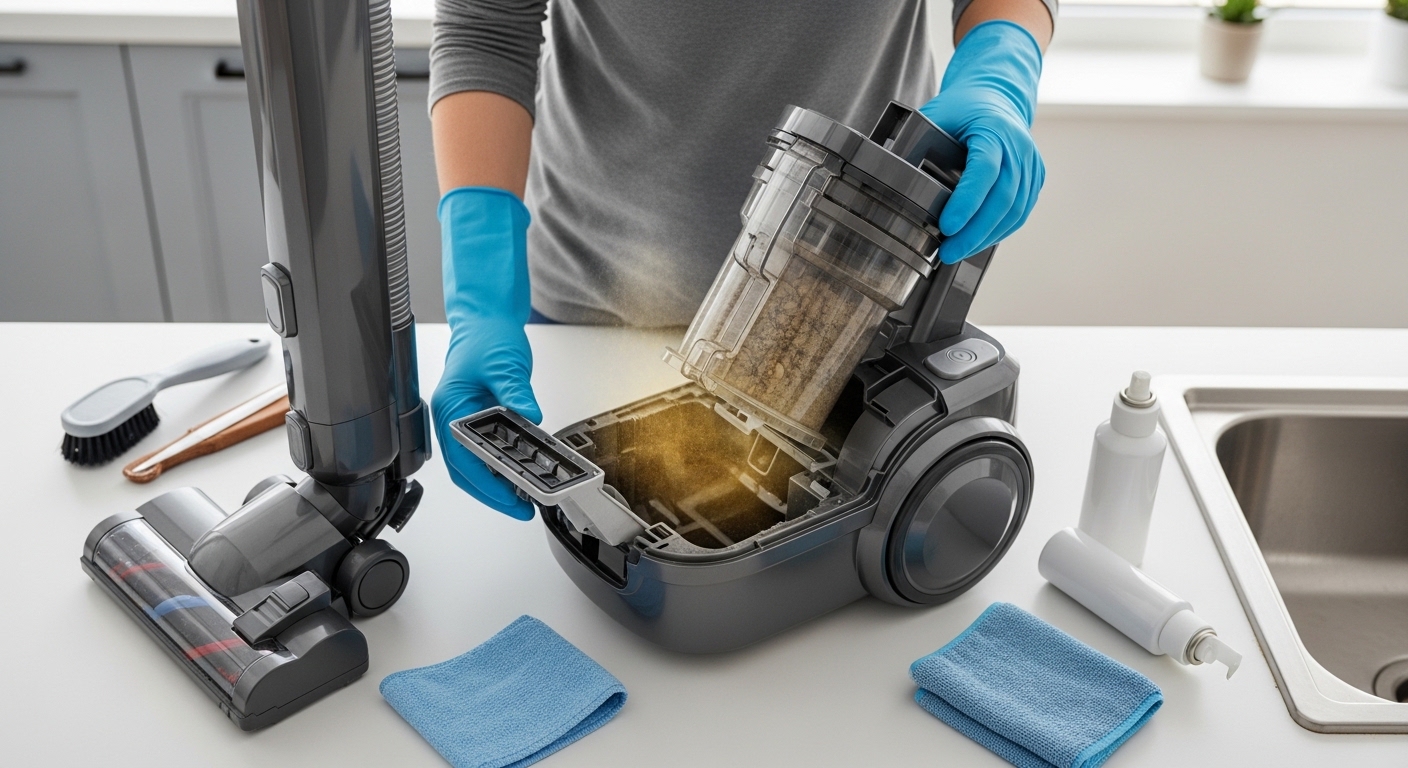
Man, there’s nothing worse than switching on your vacuum cleaner and getting hit with that funky, musty stank instead of fresh-clean carpet vibes. If you’ve ever wondered why your vacuum smells like a swamp after a good cleaning session, you’re not alone. It’s like, you just spent 30 minutes vacuuming, and suddenly your living room smells like old gym socks. So yeah, I’m gonna walk you through exactly how to clean a vacuum cleaner that smells, and trust me, it’s not rocket science, just a few weird little habits you gotta get into.
Why Your Vacuum Smells in the First Place
Okay, so first thing’s first, don’t blame the vacuum immediately—it’s usually stuff you didn’t even notice. Dust, dirt, pet hair, spilled food bits, and even dampness can sit in there and fester. Basically, your vacuum becomes a little ecosystem for odor. And yeah, filters get gunky, bags get full, and hoses—oh man, hoses—can trap stuff that slowly turns into this invisible stinky monster.
Some quick stats to put it in perspective: according to the American Cleaning Institute, vacuum filters can trap up to 99% of fine dust particles, but if you never wash or replace the filter, you’re basically just holding onto all that nastiness. So yeah, smells are inevitable if you skip maintenance.
Tools You’ll Need to Clean Your Smelly Vacuum
Before diving into the nitty-gritty, let’s gather stuff so you’re not halfway through and realize you need 37 different products. Here’s what usually works best:
- Warm water (not boiling, don’t fry your vacuum parts)
- Mild dish soap or detergent
- White vinegar or baking soda (nature’s tiny miracle workers)
- Soft cloths or microfiber towels
- Old toothbrush or small scrubbing brush
- Replacement filters or vacuum bags if needed
It’s not fancy, but trust me, a vacuum that smells like roses is basically just a handful of common household items away.
Step 1: Empty the Vacuum Bag or Canister
This one sounds obvious, but like, so many people skip it. If you’ve got a bagless vacuum, remove the dust canister and dump it. Yeah, even that tiny bit at the bottom counts. For bagged vacuums, check if the bag’s full, and if it is, swap it out. Don’t just squish it down and hope for the best—odors hang around like unwelcome guests.
Pro tip: Once you’ve emptied it, rinse the canister with warm soapy water. Let it air dry completely before putting it back. Any dampness left in there is basically a starter kit for mold.
Step 2: Clean or Replace the Filter
Filters are the secret stinky culprits in most vacuums. Most machines have at least one HEPA or foam filter, and they’re like little sponges for bad smells. Check your user manual to see which ones are washable.
For washable filters:
- Rinse under warm running water.
- Gently squeeze, don’t wring, because you’ll break it.
- Leave it to dry completely (takes a few hours).
For non-washable ones, just replace ‘em. A clogged filter doesn’t just make your vacuum smell; it lowers suction and can damage the motor. And yes, it’s worth spending a few bucks rather than suffering through that mildew funk.
Step 3: Scrub the Brush Roll and Attachments
Brush rolls are sneaky. Hair, string, and random debris twist around it and start smelling funky. Pull out the brush and carefully snip tangled hair with scissors. You can wipe it down with soapy water or a cloth dampened with vinegar solution. Same goes for the smaller attachments—pet hair likes to hide in those little corners.
Quick checklist for attachments:
- Crevice tool – usually full of dust
- Upholstery brush – trapped crumbs galore
- Hose – sometimes smells if damp stuff got inside
If it’s been a while, I promise, the smell coming from a clean brush roll is night and day.
Step 4: Deodorize the Vacuum
Now we’re talking the “final boss” stage. Even after cleaning, vacuums can hold a faint smell. Baking soda is your best friend here. Sprinkle a little in the canister or directly on the brush roll before vacuuming—it helps neutralize odors.
Some people swear by a little dab of essential oil on the filter, like lavender or tea tree, but be careful not to clog the filter with oil. A few drops on a small cloth inside the bag or canister works without risk.
Step 5: Check the Hose for Trapped Gunk
Hoses are the sneaky stinky spots. Sometimes, something small like a forgotten crumb or a bit of sticky dirt gets stuck and starts festering. Detach the hose if your vacuum allows it, shine a flashlight, and if you see any blockage, try a long flexible brush or even a broomstick to push it out.
Pro tip: After clearing it, run a damp cloth through the hose and let it air dry. A dry hose = no mold = no funky smell.
Step 6: Regular Maintenance to Prevent Future Smells
The best way to keep your vacuum smelling like…well, not a swamp, is to keep it up. Here’s a quick routine:
- Empty canister/bag after every few uses
- Wash or replace filters monthly
- Check brush roll for hair weekly
- Wipe the vacuum exterior monthly
- Occasionally sprinkle baking soda inside
If you follow this, you might even forget your vacuum ever smelled in the first place. Seriously, it’s all about small consistent habits.
Bonus Tips: When to Call in a Professional
Sometimes, no matter how much elbow grease you put in, the smell persists. If:
- You smell burnt plastic
- There’s persistent mold even after cleaning
- The vacuum seems clogged internally beyond hose or canister
…then it might be time for a professional service. Motors and internal compartments can hold stinky dust that home methods just can’t reach.
Real-Life Example
I had a friend, Alex, whose vacuum smelled so bad his cat refused to go near it. He followed this exact routine: emptied the canister, scrubbed the brush roll, replaced the filter, and sprinkled baking soda before running it. Within a day, that vacuum went from “stinky monster” to “almost pleasant to use.” It’s proof, even stubborn smells can be tamed.
Common Mistakes People Make
- Leaving the vacuum in a damp storage area
- Skipping filter replacement
- Overfilling the dust bag
- Using strong scented sprays directly on the motor (can damage it)
Avoid these, and you’ll save yourself headaches and the stank.
Conclusion
So yeah, cleaning a vacuum cleaner that smells isn’t glamorous, but it’s totally doable. A little time, a few household items, and some regular maintenance go a long way. Next time your vacuum starts smelling funky, you’ll know exactly where to poke, scrub, rinse, and deodorize. And honestly, there’s nothing more satisfying than flipping that switch and smelling clean air instead of…ugh, that swampy funk.
Once you start doing this consistently, you might even enjoy vacuuming a little more. Weird, right? But trust me, the satisfaction of a fresh-smelling machine is underrated.
Would you like me to also make a step-by-step visual table for this cleaning routine? It could make the process way easier to follow.