

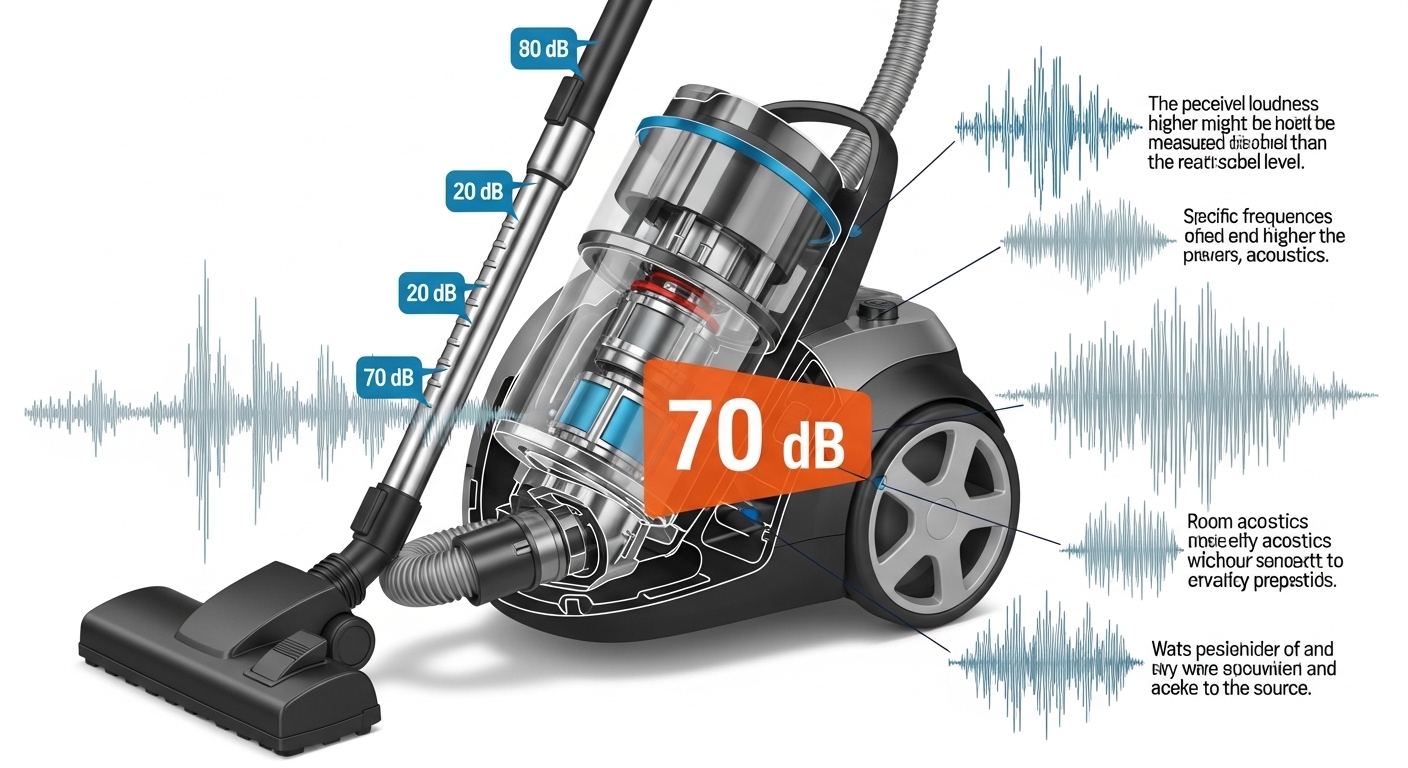
You’ve probably wondered how many decibels is a vacuum cleaner while standing there, half-annoyed, half-impressed, thinking why does this thing sound like it’s trying to launch into space in your living room. Like, you just wanted clean floors, not a whole audio event, right?
Truth is, vacuum noise isn’t just about loudness—it’s about how it hits your ears, your mood, even your patience. And yeah, numbers help, but they don’t tell the full story, not really.
So, How Many Decibels Is a Vacuum Cleaner Exactly?
Most vacuum cleaners sit somewhere between 60 to 85 decibels (dB). That’s the short answer, but also kind of the incomplete one.
Here’s a quick breakdown so you can picture it better:
| Type of Vacuum Cleaner | Typical Noise Level |
|---|---|
| Robot vacuum | 55–65 dB |
| Stick vacuum | 65–75 dB |
| Upright vacuum | 70–80 dB |
| Canister vacuum | 65–75 dB |
| Older or industrial models | 80–90 dB |
Now, if you’re thinking “okay but what does 70 dB even feel like?” — fair question, honestly.
- 60 dB = normal conversation
- 70 dB = busy street noise
- 80 dB = alarm clock screaming next to your ear
So yeah, your vacuum cleaner is not exactly whispering sweet nothings.
Why Vacuum Cleaners Sound Louder Than Their Decibel Rating
Here’s where things get a bit weird. A vacuum rated at 70 dB can feel louder than something else at the same level. That’s not you being dramatic, it’s just how sound works.
1. Pitch and Frequency Matter (More Than You’d Think)
Vacuum cleaners often produce high-pitched sounds. Those are more irritating to human ears than low hums.
It’s like:
- A deep engine rumble = tolerable
- A sharp whining noise = instant headache
Even if both are technically the same decibel level.
2. Enclosed Spaces Amplify Everything
When you vacuum indoors, sound bounces around walls, floors, furniture—basically it’s trapped and multiplied a bit.
That’s why:
- Vacuuming in a small room feels louder
- Vacuuming outside (rare, but still) feels less intense
Sound doesn’t escape easily, it just kinda hangs there.
3. Proximity Makes It Personal
You’re usually right next to a vacuum cleaner. Unlike traffic noise or background chatter, this one’s basically following you around.
And your brain goes:
“this is close, this is important, pay attention”
Even if it’s not dangerous.
Are Vacuum Cleaners Too Loud for Your Ears?
Short answer: mostly no, but sometimes… yeah, kinda.
According to health guidelines:
- Below 70 dB → generally safe for long exposure
- Above 85 dB → prolonged exposure may cause hearing damage
So most modern vacuum cleaners are technically safe. But there’s a catch.
Duration Matters More Than You Think
Vacuuming for:
- 10 minutes? Probably fine
- 1–2 hours daily? Eh, not ideal
Especially if your machine is pushing closer to 80–85 dB.
And if you’ve ever finished vacuuming and felt that slight ringing or dullness in your ears… that’s your body going “hey, maybe not too often, ok?”
Quiet vs Loud Vacuums: What Actually Changes?
Not all vacuum cleaners are created equal, even if they kinda look the same on the outside.
Quiet Vacuum Cleaners (Usually 60–65 dB)
These tend to:
- Use better insulation
- Have smoother motor designs
- Focus on airflow efficiency
They’re not silent, but they don’t feel aggressive.
Loud Vacuum Cleaners (75 dB and above)
These often:
- Have stronger suction motors
- Use cheaper materials (less sound insulation)
- Produce harsher, higher-frequency noise
So yeah, louder doesn’t always mean better cleaning, even if it feels like it should.
What Makes a Vacuum Cleaner Noisy in the First Place?
It’s not just “the motor is loud.” That’s part of it, but there’s more going on.
Main Noise Sources
- Motor vibration
- Air rushing through narrow passages
- Brush roll hitting debris
- Loose components rattling slightly (you’ve heard that, right?)
All these combine into that one familiar “vacuum sound” you kinda hate but also weirdly expect.
Real-World Examples of Vacuum Noise
Let’s make this a bit more grounded.
- A modern robot vacuum at 60 dB → you can still watch TV while it runs, mostly
- A mid-range upright at 75 dB → you’ll probably raise your voice to talk
- An older vacuum at 85 dB → conversation? forget it
There was a study by the European Commission (eco-design regulations) that pushed manufacturers to reduce vacuum noise to below 80 dB for most models sold in the EU. That’s why newer vacuums are generally quieter than ones from like, 10–15 years ago.
So if yours sounds like a jet engine, it might just be… old. Not broken, just loud in a very 2008 kinda way.
Tips to Reduce Vacuum Cleaner Noise (Without Buying a New One)
If you’re stuck with a noisy vacuum, you’re not totally helpless.
Try These Small Fixes
- Clean the filters
Dirty filters force the motor to work harder → more noise - Empty the dustbin regularly
A full bin messes with airflow and adds strain - Check for blockages
Whistling or high-pitched noise often means something’s stuck - Vacuum at the right setting
Max power isn’t always necessary - Use rugs or carpets strategically
Hard floors reflect sound more than soft surfaces
None of these will make it silent, but they can shave off a few decibels—and honestly, even a small drop feels noticeable.
Is There Such a Thing as a “Silent” Vacuum Cleaner?
Not really. Anyone claiming a completely silent vacuum is… stretching the truth a bit.
But there are ultra-quiet models around 55–60 dB, which is about as close as it gets.
These are often:
- Premium models
- Designed for apartments or shared spaces
- Engineered with sound insulation in mind
They cost more, yeah, but if noise drives you slightly mad, it might be worth it.
Why People Care More About Vacuum Noise Now
This is kinda interesting actually. Noise wasn’t always a big selling point.
But now:
- More people work from home
- Apartments are smaller and closer together
- People are just… less tolerant of constant noise
So vacuum cleaner decibel levels have become a real buying factor.
Not the only one, but definitely not ignored anymore.
A Quick Reality Check on “Power vs Noise”
There’s this common idea that:
louder vacuum = stronger suction
And while that used to be somewhat true, it’s not really the case anymore.
Modern engineering allows:
- Strong suction with lower noise
- Better airflow design
- More efficient motors
So if a vacuum is loud, it’s not necessarily powerful. It might just be… inefficient.
Final Thoughts: So, How Many Decibels Is a Vacuum Cleaner?
Circling back, most vacuum cleaners fall between 60 and 85 decibels, with newer models leaning toward the quieter end.
But what really matters isn’t just the number—it’s:
- The type of sound
- How long you’re exposed to it
- How close you are to the source
And honestly, how much it annoys you personally.
Because two people can hear the same vacuum and react completely differently. One shrugs it off, the other feels like their brain is being gently sandpapered.
If you’re choosing a vacuum, don’t ignore the noise rating. It’s one of those things you think won’t matter… until you’re halfway through cleaning and already regretting your life choices just a little bit.
And yeah, once you notice it, you don’t un-notice it. That’s just how it goes.