

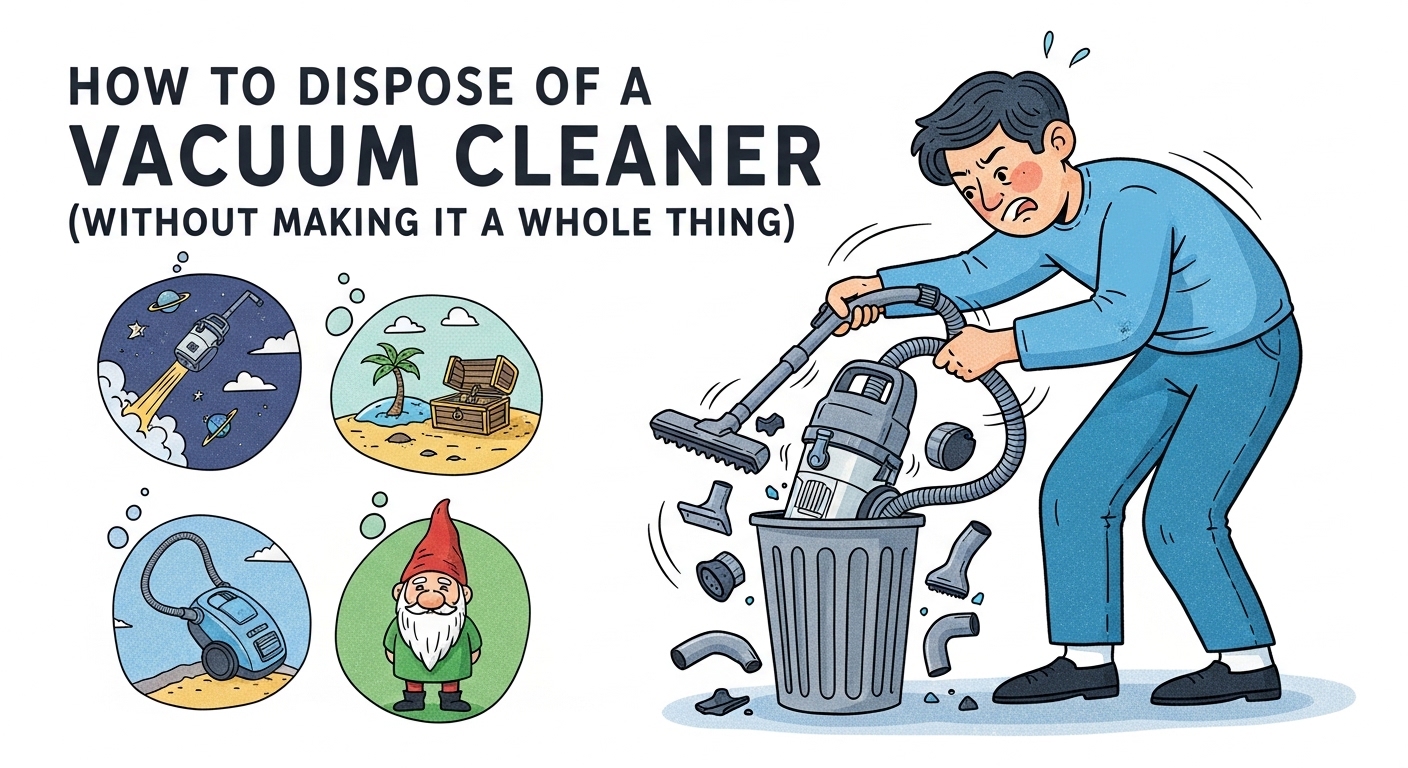
So you’re standing there, wondering how to dispose of a vacuum cleaner because it just… gave up, right? Maybe it smells like burnt toast now, maybe it screams louder than it cleans, or maybe it just stopped mid-room like it had a personal crisis. Either way, now it’s your problem, and yeah, figuring out what to do with it feels oddly more complicated than it should be.
Let’s walk through it, but not in that stiff “Step 1, Step 2” kinda way. More like how you’d actually figure it out on a slightly lazy afternoon.
Why You Can’t Just Toss It in the Trash
You could drag your old vacuum cleaner to the curb and pretend it’s normal trash, but it’s actually not that simple. These machines are kind of a weird mix of stuff — plastic, metal, wiring, sometimes batteries — and dumping them carelessly can mess with the environment in ways that don’t feel obvious at first.
According to the Global E-waste Monitor (2024), the world produced over 62 million metric tons of electronic waste, and only about 22% was properly recycled. Vacuum cleaners fall into that category of “small appliances,” which people tend to ignore more than big ones like fridges or TVs.
And like, it’s not just about rules. Inside your vacuum there might be:
- Copper wiring (valuable, recyclable)
- Plastic housing (takes centuries to break down)
- Filters that may contain dust particles and allergens
- Rechargeable batteries (in cordless models)
So yeah, tossing it in the bin is… technically easy, but also kinda wasteful in a way that nags at you later.
First Pause: Is It Really Dead?
Before you fully commit to figuring out how to dispose of a vacuum cleaner, it’s worth asking — is it actually beyond saving? Because sometimes these things act dramatic but just need a tiny fix.
Things to quickly check:
- Clogged hose or brush roll – super common, super fixable
- Full dust bag or bin – yeah, obvious, but it happens
- Filter blockage – a dirty filter can make it seem “dead”
- Loose wiring or plug issues
You’d be surprised how many vacuums get “retired” just because of a stuck sock inside the hose. Not even joking.
If it’s fixable, even barely, you might not need to dispose of it at all — which is obviously the easiest win here.
If It Still Works (Even a Bit): Donate or Give It Away
Now, if your vacuum cleaner is still doing something — like, it runs but just not perfectly — you don’t have to jump straight into disposal mode.
You could:
- Donate it to a local charity or shelter
- Give it to someone who needs a temporary fix
- Post it online for free pickup
Places like community centers or thrift shops often accept working appliances. Even if it’s slightly imperfect, someone else might find it useful in ways you wouldn’t.
It’s a weirdly satisfying option too, like the vacuum gets a second life instead of ending up in a pile somewhere.
Recycling: The Smart Way to Dispose of a Vacuum Cleaner
Alright, if it’s truly done, recycling is probably your best move. This is where most people get stuck though — like, where exactly do you take it?
Common Recycling Options
Here’s a quick breakdown that actually helps:
| Option | What Happens | Notes |
|---|---|---|
| Local recycling centers | Break down materials | Call ahead, not all accept appliances |
| Retailer take-back programs | Store recycles for you | Some require purchase of new item |
| Scrap dealers | Extract metals | You might even get a small payment |
| Municipal e-waste drives | Bulk collection events | Usually scheduled, not daily |
If you’re in a city, there’s usually at least one place handling electronic waste properly. In smaller towns, it might take a bit more asking around, but scrap collectors often handle these items too.
Can You Take It Apart Yourself?
This part is oddly tempting. Like, you look at the vacuum and think, “what if I just… dismantle it?”
And yeah, you can, but there are some things to keep in mind.
What You Can Safely Remove
- Dust bags or bins (dispose separately)
- Filters (usually non-recyclable)
- External plastic parts
What Gets Tricky
- Motors (contain copper and magnets)
- Batteries (especially lithium-ion)
- Internal wiring
If you’re the type who enjoys taking things apart just to see how they work, go for it — but don’t force anything or expose yourself to dust clouds that have been collecting since who-knows-when.
Also, batteries should never be thrown in regular trash. That’s one of those quiet but serious hazards.
Special Case: Cordless Vacuum Cleaners
If you’re dealing with a cordless model, the process shifts a bit. These usually have rechargeable batteries, which need proper handling.
Battery Disposal Tips
- Remove the battery if possible
- Take it to a battery recycling point
- Don’t puncture or crush it (seriously, don’t)
Lithium-ion batteries can overheat or even catch fire if mishandled, so this isn’t just a “nice to do it properly” situation — it’s more like, yeah, do it properly.
Retailer Take-Back Programs (Underrated Option)
Some electronics retailers offer take-back or recycling programs when you buy a new appliance. It’s not always advertised loudly, which is annoying, but it exists.
You walk in with your old vacuum cleaner, walk out with a new one, and they handle the disposal part. It feels almost suspiciously easy.
You might need to:
- Show proof of purchase
- Pay a small recycling fee
- Ensure the vacuum meets size/type criteria
Still, it’s worth asking. Saves you the whole “where do I take this thing” spiral.
What About Selling It for Parts?
This one’s a bit niche, but kinda clever.
Even if your vacuum cleaner doesn’t work, parts of it might still be useful:
- Motors
- Wheels
- Attachments
- Hoses
Some people buy broken appliances just to salvage parts. You can list it online with a clear description like “for parts only,” and you might actually get a few bucks for something you were about to throw away.
Not life-changing money, but still, better than nothing.
Environmental Impact (Why This Actually Matters)
It’s easy to think, “it’s just one vacuum cleaner,” but multiplied by millions, it becomes something else entirely.
Improper disposal can lead to:
- Toxic materials leaking into soil
- Air pollution from burning plastics
- Loss of recyclable metals
A study by the United Nations Environment Programme pointed out that recovering metals from e-waste uses up to 80% less energy compared to mining new materials. That’s not a small difference.
So yeah, your one decision isn’t tiny in the bigger picture, even if it feels like it.
Quick Checklist: What You Should Actually Do
If everything above feels like too much, here’s the simplest version:
- Check if it can be repaired
- If yes, fix or donate it
- If no, find a local recycling option
- Remove batteries (if any) and recycle separately
- Avoid throwing it in regular trash
That’s it. You don’t need to overcomplicate it, even though it feels complicated at first.
A Slightly Honest Ending
Figuring out how to dispose of a vacuum cleaner isn’t exactly something you plan for. It just shows up one day, usually when you already have enough going on, and now there’s this bulky, slightly dusty machine staring at you like “well?”
But once you get past that initial hesitation, it’s actually manageable. A bit annoying, yeah, but not impossible. And maybe, just a little bit, it feels better knowing you didn’t just dump it somewhere and forget about it.
If you’re still unsure, tell me what kind of vacuum you’ve got — cordless, upright, robot, whatever — and I’ll help you figure out the easiest next step without making it a whole project.