

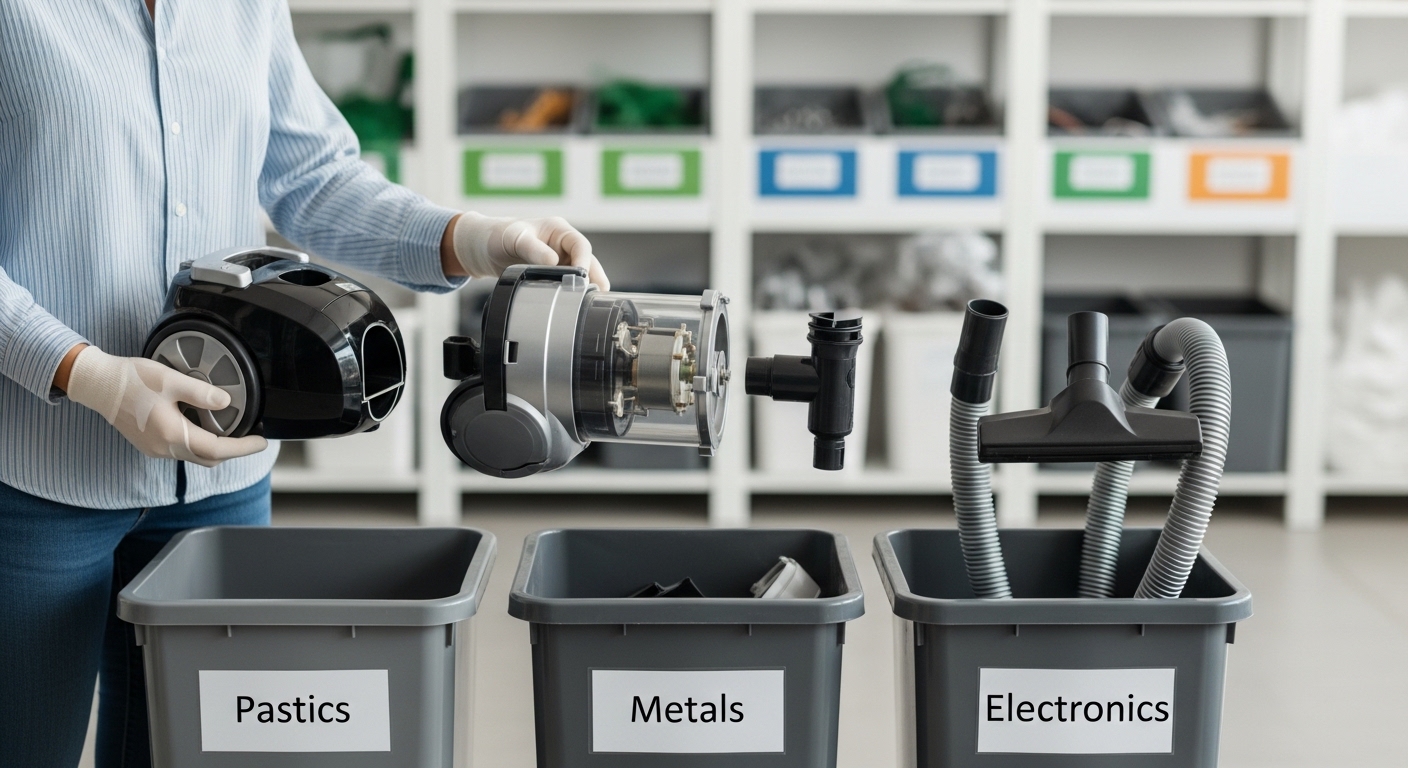
You’re probably staring at that old machine right now, wondering how to dispose of vacuum cleaner without just chucking it somewhere and pretending it’s not your problem anymore. Yeah, it happens more often than people admit, like the vacuum just… gives up one day, makes a weird burning smell, and suddenly you’re stuck with this bulky thing that no one really talks about getting rid of.
Let’s sort this out properly, but not in a stiff, textbook kinda way. Real talk, real options, and a few things you maybe didn’t even think about.
Why You Can’t Just Toss It Anywhere
It feels harmless, right? It’s just a vacuum cleaner. But here’s the catch — inside that thing is more than dust and regret.
Most vacuum cleaners contain:
- Plastic components (a lot of it, actually)
- Metal parts like copper wiring
- Small motors and electronic bits
- Sometimes batteries (especially cordless ones)
According to global e-waste reports, over 50 million metric tons of electronic waste are generated every year, and only about 17% gets properly recycled. That’s… not great.
Throwing your vacuum into regular trash means:
- It ends up in landfills
- Toxic materials can leak into soil and water
- Recyclable materials go to waste
So yeah, it’s not just about decluttering your house. It’s about not quietly contributing to a bigger problem, even if it feels small.
First Thing First: Check If It’s Really Dead
Before you go deep into how to dispose of vacuum cleaner, pause for a sec. Is it actually beyond saving?
Sometimes what looks like a “dead vacuum” is just:
- A clogged hose
- A full dustbin (sounds obvious but happens)
- A worn-out belt
- A dead battery in cordless models
A quick fix might bring it back to life, and honestly, that’s the easiest “disposal” — not disposing it at all.
If repair costs are low compared to buying new, it might be worth it. But if it’s making noises like it’s auditioning for a horror movie, yeah… time to move on.
Option 1: Recycle It Properly (Best Choice, Even If It’s Slightly Annoying)
If you’re serious about responsible disposal, recycling is the way to go. Not the most exciting option, but definitely the right one.
Where to recycle vacuum cleaners:
- Local e-waste recycling centers
- Municipal waste collection points
- Electronics retailers (some accept old appliances)
In many countries, laws actually require proper disposal of electronic waste. In the EU, for example, the WEEE Directive (Waste Electrical and Electronic Equipment) regulates how devices like vacuum cleaners should be recycled.
What gets recycled?
- Metals are melted down and reused
- Plastics are processed into new materials
- Motors and wiring are dismantled
It’s kinda weird to think your old vacuum might come back as part of something else, but that’s the idea.
Option 2: Donate It (If It Still Works… Even Barely)
If your vacuum cleaner is still functional — even if it’s not perfect — someone else might find it useful.
Places that often accept used appliances:
- Local charities
- Shelters
- Community centers
- Second-hand shops
There’s always someone moving into a new place, or trying to get by, who wouldn’t mind a slightly noisy vacuum if it still sucks up dirt (which is, like, its whole job anyway).
Just clean it a bit before donating. Nobody wants your old dust along with the machine.
Option 3: Sell It (Yes, Even Old Ones Sometimes Sell)
You’d be surprised what people will buy.
Even older vacuum cleaners can have value if:
- They’re from a known brand
- Parts still work
- They can be repaired
Platforms you can use:
- Online marketplaces
- Local classifieds
- Social media groups
A slightly awkward but honest listing works best. Something like:
“Works fine, just a bit loud and occasionally moody.”
That kind of honesty actually builds trust, weirdly enough.
Option 4: Take It Apart (Only If You’re That Kind of Person)
If you’re curious, or just bored one afternoon, dismantling your vacuum cleaner can be oddly satisfying.
You might find:
- Copper wires (valuable in recycling)
- Reusable screws and parts
- Motors that hobbyists sometimes repurpose
But, fair warning:
- It can get messy
- Some parts are sharp
- You need basic tools and patience
This isn’t for everyone, and that’s okay. Not everyone wants to turn appliance disposal into a weekend project.
Option 5: Manufacturer Take-Back Programs
Some brands actually take responsibility for their products after they’re done being useful.
These programs:
- Accept old units
- Ensure proper recycling
- Sometimes offer discounts on new purchases
Check if the brand of your vacuum cleaner offers this. Not all do, but when they do, it’s a pretty smooth process.
Option 6: Bulk Waste Collection (Last Resort, But Still Better Than Dumping)
If nothing else works, your local municipality might offer bulk waste pickup.
Important things to know:
- You usually need to schedule it
- There may be a fee
- Items are handled differently than regular trash
It’s not as eco-friendly as recycling, but still better than illegal dumping, which can result in fines in many areas.
Cordless Vacuum Cleaners Need Extra Care
Now this part is easy to overlook.
Cordless vacuums contain lithium-ion batteries, and those are… not something you wanna casually throw away.
Improper battery disposal can:
- Cause fires
- Leak harmful chemicals
- Damage recycling systems
What to do instead:
- Remove the battery if possible
- Take it to a battery recycling point
- Follow local guidelines
According to safety reports, lithium-ion batteries are responsible for thousands of waste facility fires annually. So yeah, this part matters more than it seems.
A Quick Comparison of Disposal Methods
| Method | Effort Level | Environmental Impact | Best For |
|---|---|---|---|
| Recycling | Medium | Very Positive | Broken or unusable vacuums |
| Donation | Low | Positive | Working vacuums |
| Selling | Medium | Positive | Functional older models |
| Dismantling | High | Positive | DIY enthusiasts |
| Manufacturer Take-Back | Low | Very Positive | Supported brands |
| Bulk Waste Pickup | Low | Moderate | Last resort option |
Not super complicated when you see it laid out like this, honestly.
What You Should Definitely Not Do
Sometimes knowing what not to do is more useful than anything else.
Avoid:
- Dumping it illegally (fines can be pretty steep)
- Burning it (toxic fumes, very bad idea)
- Throwing it in regular bins if e-waste rules apply
- Ignoring batteries in cordless models
It’s one of those situations where doing the wrong thing is easier, but also kinda worse in ways you don’t see immediately.
Real-Life Example (Because This Happens More Than You Think)
A study in the UK found that small household appliances, including vacuum cleaners, are among the most commonly hoarded or improperly discarded items.
People either:
- Store them “just in case”
- Throw them out incorrectly
- Forget about them completely
You probably know someone (or maybe it’s you, no judgement) with an old vacuum sitting in storage, doing absolutely nothing except collecting more dust than it ever cleaned.
A Slightly Unexpected Tip: Timing Matters
This might sound random, but when you choose to dispose of your vacuum can actually make things easier.
Best times:
- During local recycling drives
- Seasonal clean-ups
- When retailers run trade-in programs
You’ll find more options available, and sometimes even incentives.
So, What’s the Smartest Way to Dispose of Vacuum Cleaner?
If you’re looking for the simplest “good enough” answer:
- Try to fix it (quick check)
- If it works, donate or sell
- If it doesn’t, recycle it properly
- Handle batteries separately if cordless
That’s it. No overthinking required.
Final Thoughts (The Honest Kind)
Getting rid of a vacuum cleaner feels like such a small thing, almost not worth thinking too hard about. But multiply that by millions of households, and suddenly it’s not so small anymore.
You don’t need to be perfect about it, honestly nobody is. But doing it a bit more thoughtfully than just tossing it away — that’s already better than what most people do.
And now at least you’re not stuck staring at it, wondering what the heck you’re supposed to do next.