

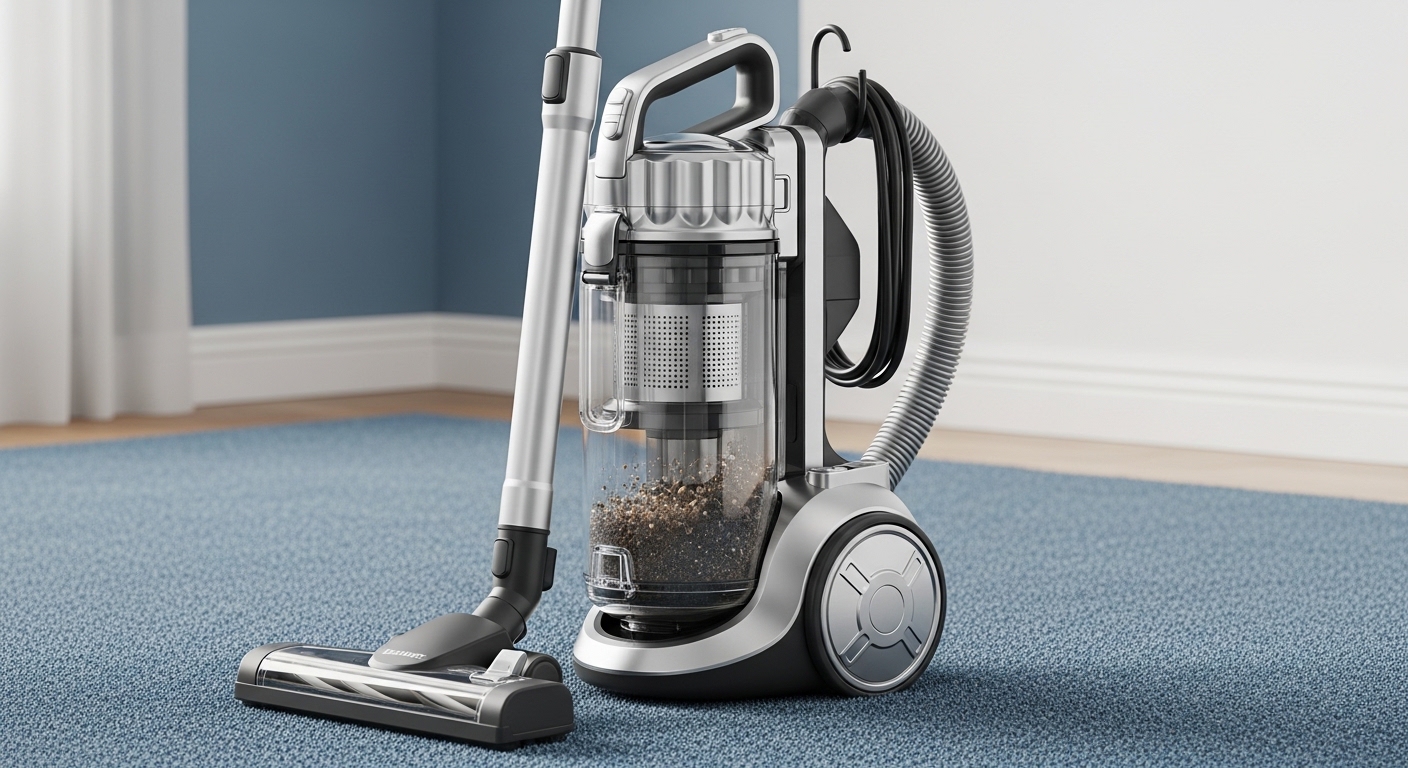
Ever been mid-cleaning and realized that your vacuum’s bag is packed tighter than your closet after holiday shopping? Yeah, that’s exactly the moment a bagless vacuum cleaner makes you think, “why didn’t I get one of these sooner?” You don’t have to wrestle with paper bags, worry about running out mid-clean, or end up sneezing every time you pull a bag full of dust out—because all that’s gone with a bagless system. It’s kinda like having a tiny tornado in a box that just gobbles everything up and keeps going, and honestly, once you see how it works, it’s hard to go back.
How Bagless Vacuum Cleaners Work
Bagless vacuums use cyclonic suction to separate dirt from the air, which sounds kinda fancy but basically means they spin the dust around inside a clear container until it all falls out. No magic, just physics doing its thing. The spinning action forces heavier particles down into a canister while the cleaner air goes through filters and back out. Most modern models have HEPA filters, which are great if anyone in your house is allergic because they trap teeny-tiny particles you can’t even see.
Here’s a quick breakdown of what’s happening inside your bagless vacuum:
- Cyclone technology: Creates a fast-spinning vortex that separates dust and debris from the airflow.
- Dust canister: A transparent container that holds dirt; easy to see when it’s full.
- Filters: HEPA or standard filters that catch finer particles before air leaves the vacuum.
- Motor: The heart of it all, generating suction to pull dirt off carpets, floors, and even tricky corners.
Advantages of Going Bagless
So why do folks switch to bagless vacuums? There’s more than just “no bag to buy,” although that alone is a big deal. First off, you can see exactly how dirty your home is. There’s some weird satisfaction in watching dust, crumbs, pet hair, and who-knows-what swirl into a clear canister. It’s almost like a science experiment every time you clean.
Here’s why you might actually start loving your cleaning routine:
- Cost-effective – No need to constantly buy replacement bags, which can get pricey over a year.
- Eco-friendly – Less waste going to the trash, since you’re just emptying a canister.
- High efficiency – Cyclone tech keeps suction strong longer because the system doesn’t clog as fast.
- Easy maintenance – Most parts are washable; just rinse and pop them back in.
- Lightweight options – Many bagless models are smaller and easier to carry around.
But, of course, nothing’s perfect. Some bagless vacuums can be messier when you empty the canister, and cleaning the filters isn’t as “grab-and-forget” as tossing a bag. Still, for most people, the benefits outweigh the minor annoyances.
Bagless vs. Bagged: What’s Really Different
If you’ve been around vacuums, you’ve probably seen the classic bagged ones lurking in corners. They’re reliable, sure, and some have insane filtration, but the bags themselves are a hassle. Here’s a side-by-side snapshot:
| Feature | Bagless Vacuum | Bagged Vacuum |
|---|---|---|
| Initial Cost | Usually lower | Sometimes higher |
| Maintenance | Clean canister & filters | Replace bags regularly |
| Suction Efficiency | Can drop if filters clog | Usually consistent until bag full |
| Allergy Friendliness | HEPA filters help, but emptying can stir dust | Minimal exposure if bag sealed |
| Environmental Impact | Less waste | More disposable waste |
Notice how bagless models give you a more hands-on, almost interactive cleaning experience? Some people love that; others hate seeing all the dust they just vacuumed.
Real-World Examples & Stats
Bagless vacuums aren’t just “trendy,” they’ve got stats backing them up. According to a report from the International Housewares Association, homes that switched to bagless models spent 40% less on vacuum bags annually. And pet owners? They swear by bagless vacuums because fur tends to clog bags super fast, but canisters can handle it without slowing down.
Brands like Dyson and Shark dominate the bagless market, and for good reason. Dyson’s cyclone tech was revolutionary when it launched, allowing for nearly zero loss in suction over time. Shark, on the other hand, focuses on affordability and versatility with multi-surface designs. If you have pets or kids, these models are almost like a lifeline—they handle everything from sand in the living room to cereal in the kitchen.
Common Misconceptions
People get kinda confused thinking bagless means “no maintenance at all,” which isn’t true. Filters need washing, the canister needs emptying, and sometimes the cyclone chamber can get gummed up with fine dust. But compared to fiddling with bags or buying new ones every month, it’s a breeze.
Another myth is that bagless vacuums are weak. On the contrary, many models maintain suction better over long periods. Cyclone technology ensures that debris doesn’t clog the airflow as quickly, which is exactly what happens when a bag fills up.
Tips for Using a Bagless Vacuum Effectively
Even the best bagless vacuum can underperform if you don’t handle it right. Here’s what’s worked for most people:
- Empty regularly – Don’t wait until it’s overflowing. Frequent emptying keeps suction optimal.
- Wash filters – Follow manufacturer instructions; usually rinsing every month is fine.
- Check for clogs – Hair and string can wrap around the brush; remove them to maintain efficiency.
- Use attachments – Crevice tools, pet brushes, and extension wands make a huge difference for corners and upholstery.
- Store smart – Keep upright or hangable if possible to avoid kinks in hoses.
Who Should Consider a Bagless Vacuum
Bagless vacuums aren’t just for minimalist homes or tech geeks. They’re excellent for:
- Pet owners – Fur and dander get collected in canisters instead of clogging bags.
- Allergy sufferers – HEPA filters trap fine dust, pollen, and other irritants.
- Frequent cleaners – Easy to see dirt levels and quick to empty.
- Budget-conscious users – Saves money over the long run by ditching disposable bags.
If you’re someone who hates the idea of dealing with messy bags, likes seeing results in real-time, or wants something low-waste, bagless vacuums are basically built for you.
Final Thoughts
Bagless vacuum cleaners might look intimidating with all their transparent plastic parts and spinning cyclones, but once you get used to them, they feel like a tiny cleaning assistant that never complains. The main trade-off is a little extra attention when emptying and cleaning filters, but compared to the hassle of replacing bags and sneezing dust clouds, it’s almost nothing.
Ultimately, whether you choose bagless or bagged comes down to your lifestyle. If you want convenience, cost savings, and the satisfaction of seeing all the dirt you’ve just sucked up, bagless vacuums hit the sweet spot. They’re practical, surprisingly powerful, and kind of fun to watch in action. So next time your old vacuum makes you wrestle with a dusty bag, maybe it’s time to see what life’s like on the bagless side—you might never go back.
Bagless vacuum cleaners aren’t just another gadget; they’re an upgrade to your whole cleaning experience, combining tech, convenience, and a bit of that oddly satisfying visual feedback we all secretly enjoy. Once you’ve tried one, you’ll notice the difference immediately—less hassle, more clean, and yeah, less sneezing.