

You ever just stared at your vacuum cleaner, thinking, “wait… how the heck does this thing actually suck up all the dirt without spilling it everywhere?” Yeah, me too. It’s kinda funny when you realize it’s basically a little cyclone in a box that somehow corrals dust, hair, and those random crumbs you swear weren’t there five minutes ago. But the way a vacuum cleaner works is a lot more clever than just “it sucks stuff up.” There’s a mix of physics, engineering, and a little bit of household magic happening every time you push that button.
The Basic Idea Behind Vacuum Suction
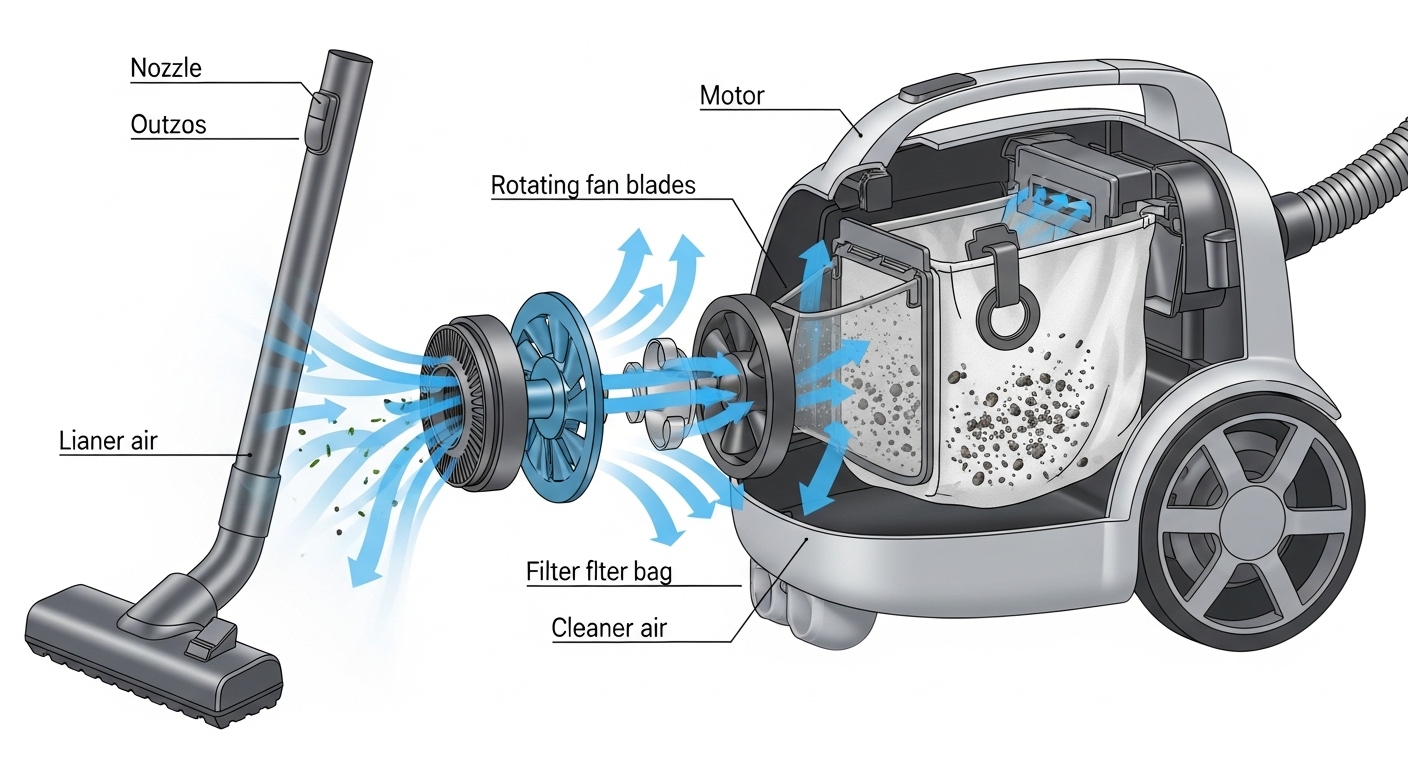
So let’s break it down, not too textbook-y, but enough so it makes sense. The thing about a vacuum cleaner is that it doesn’t really “suck” like a giant straw. What it actually does is create a low-pressure zone inside the machine. You know, pressure kinda like when you open a soda bottle and the gas wants to escape? Yeah, that principle. The motor in the vacuum spins a fan really fast, which pushes air out of the bag or canister, creating that low-pressure area. When the pressure inside is lower than the room, all the dirt, dust, and crumbs are basically “pulled” in to even things out. Science is sneaky that way.
Most people don’t think about the airflow path either. There’s usually an inlet, a hose, the canister or bag, and then the exhaust. Every section has its job. The hose guides the debris, the bag stores it, and the exhaust vents the now-cleaned air. Simple? Sure. Elegant? Absolutely. And you’re probably walking around your house with a tiny weather system in your hands every time you vacuum. Weird, right?
Motors and Fans: The Heartbeat of a Vacuum Cleaner
You wanna talk guts? Motors. The motor is basically the beast of the vacuum cleaner world. Modern vacuums usually have electric motors spinning at tens of thousands of RPMs. That’s rotations per minute, for the ones counting. This crazy speed is what drives the fan to make that suction. Some fancy vacuums use brushless motors to be quieter and more efficient, which is great if you hate vacuuming because of the noise. Side note: you ever notice some vacuums just don’t pick up crumbs from carpets properly? Yup, usually motor power or airflow design issue.
And then there’s the fan itself. It’s not just any fan. It’s a centrifugal fan most of the time. Air enters the center and gets flung outwards by spinning blades, which reduces pressure at the center — that’s your suction again. Kinda brilliant if you think about it. The thing is, more RPMs doesn’t always equal better vacuuming; the fan design, hose width, and bag type also play massive roles.
Bags, Canisters, and Cyclones: Where Dirt Goes
Now, once dirt enters the vacuum, it needs a place to hang out, right? That’s where bags, canisters, or cyclonic separators come in. Traditional vacuums just use a cloth or paper bag. Simple, cheap, works fine. But cyclonic vacuum cleaners? They’re a bit next level. They spin the air around in a cone, kinda like a mini tornado inside your vacuum, and centrifugal force throws the dirt down into the container while letting the air escape. That’s why modern Dyson-ish vacuums don’t need a bag and still don’t blow dust back at you.
Interestingly, cyclonic separation isn’t just a marketing gimmick. NASA and engineers in industrial cleaning used the same idea to separate particles from gases decades ago. So yeah, every time you’re vacuuming with one of these, you’re basically doing a tiny bit of space-age engineering in your living room.
Filters: Catching the Sneaky Stuff
You can’t just blow the air out into the room, right? Allergens, dust mites, tiny plastic bits from shoes, all that jazz. That’s where filters come in. Some vacuums just have a simple foam filter, some have HEPA filters, which are insanely fine and can trap particles as small as 0.3 microns. That’s like catching stuff you can’t even see unless you’re a wizard or have a microscope.
Filters also mess with suction if they’re clogged. Ever noticed your vacuum losing oomph? Yeah, that’s not your imagination. Clean filters = better suction. It’s literally science, and yet people keep forgetting it. Quick tip: check your filters at least every few months if you vacuum a lot.
Types of Vacuum Cleaners and How They Differ
Now, you might think all vacuums are basically the same. But nah, they’re more diverse than your shoe collection. Let’s run down the main types:
- Upright Vacuums: Big, heavy, usually best for carpets. The motor’s up front and the brush roll agitates the fibers. Classic American style.
- Canister Vacuums: Smaller head, motor separated in a canister on wheels. Great for stairs and hardwood floors. European homes love these.
- Robotic Vacuums: These little dudes map your house, navigate obstacles, and suck up crumbs while you binge-watch TV. Sensors and sometimes LIDAR make these surprisingly smart.
- Handheld Vacuums: Tiny, portable, great for cars, sofas, crumbs on countertops. Weak motor compared to full-size but crazy convenient.
- Stick Vacuums: Somewhere between handheld and upright. Light, cordless options, decent suction for small homes.
Different vacuums use slightly different approaches, but the core physics — motor spins fan → creates low pressure → air carries dirt → filter traps particles — stays the same. The variations are mostly about convenience, power, and how clean your floors get.
Why Suction Sometimes Feels Weak
Ever wonder why your vacuum sometimes just seems to “slide over dirt” instead of picking it up? Multiple reasons. Hose leaks, bag full, dirty filter, or carpet too thick for your vacuum’s brush roll. Sometimes, the motor isn’t pulling enough amps, which is a fancy way of saying it’s tired. There’s also the “airflow restriction” concept. Think of it like trying to drink a thick milkshake through a tiny straw. Air can’t move fast enough, so nothing comes up. Adjust your vacuum to the right settings for your floor type and bam — instant pickup improvement.
Maintenance Tips That Actually Matter
Most people don’t realize vacuum cleaners are kinda high-maintenance if you want them to last. You gotta:
- Clean filters regularly.
- Check for clogs in hoses.
- Empty bags or canisters before full.
- Inspect the brush roll for tangled hair or threads.
- Occasionally check belts if your model has them.
A little regular care = years of good performance. Skipping it? Expect low suction and a cranky machine.
Real-World Example: Suction and Power Ratings
Let’s geek out for a sec. A good vacuum might have a motor rated at 1200–2000 watts, but that doesn’t tell the full story. Suction power (usually measured in air watts or pascals) is the real deal. For example, some Dyson vacuums hit around 150–200 air watts — enough to pick up coins, small screws, and yes, even sand from carpet. A normal household upright might be closer to 100 air watts, which works fine for most dust and pet hair. So yeah, watts on the box ≠ cleaning power, just another marketing quirk.
The Science Behind Brush Rolls and Carpet Cleaning
You’ve seen those spinning brushes on vacuums, right? They aren’t just for show. Brush rolls agitate carpet fibers to loosen dirt that’s trapped way down deep. Without them, your vacuum’s basically gliding over the top layer like a hovercraft. But, be careful with delicate rugs — too aggressive brushes can fray fibers. Some modern vacuums have adjustable height and brush settings, which is handy for mixed flooring.
Conclusion: Appreciating the Little Machine That Could
So next time you plug in your vacuum and push it around the house, think about all the tiny physics tricks happening in there. Low pressure zones, high-speed fans, centrifugal forces, and filters all working together like a little choreographed dance of dirt management. It’s not magic, it’s clever engineering. And knowing even a bit of how vacuum cleaner works can make you more confident in picking the right model, maintaining it, and actually getting your house cleaner without the frustration.
You might never look at a vacuum the same way again. It’s weirdly satisfying to realize that under all that plastic and metal, there’s a micro-engineering masterpiece quietly fighting your crumbs and pet hair every day. And honestly, a little respect for this tiny, noisy tornado in your living room never hurts.
Word count: 1,349