

So, here you are, staring at that broken vacuum cleaner in the corner of your living room thinking, “well… now what?” It’s not like it just disappears if you ignore it, right? And tossing it in the trash feels kinda… wrong. I mean, these things got motors, plastics, cords, filters… it’s not exactly biodegradable, and let’s be honest, that vacuum’s been clinging to life for a few years anyway. You’re not alone in this — heaps of folks are in the same boat every week. But before you just shove it in the garage till it turns into a dust sculpture, let’s talk about how to actually dispose of broken vacuum cleaner properly.
Why You Can’t Just Throw It Away
First off, most of the components in a vacuum are not really trash-safe. Motors, batteries, and cords contain metals and chemicals that, if dumped in a landfill, could leach into soil and water. According to the Environmental Protection Agency (EPA), electronic waste is one of the fastest-growing waste streams in the U.S., with millions of tons dumped yearly. So, yeah, tossing a broken vacuum into your regular garbage isn’t just lazy, it’s kinda eco-unfriendly.
Also, even if your local garbage service allows large-item pickup, they often separate recyclables anyway. The vacuum may just end up in a sorting facility, then disassembled, sometimes in ways that could’ve been avoided if you planned ahead. Basically, leaving it in your closet isn’t a “solution,” it’s a postponed headache.
Step 1: Check if It’s Still Worth Fixing
Before you even think about disposal, ask yourself if the vacuum cleaner can be salvaged. Sometimes, what seems like a death sentence is just a clogged hose, a broken belt, or a worn filter. Brands like Dyson, Shark, and Hoover often have repair guides or replacement parts for sale online. It might cost less than you think to get it working again.
But if the motor’s fried or the electronics are toast, don’t get sentimental — it’s officially a candidate for disposal.
Step 2: Separate Components for Recycling
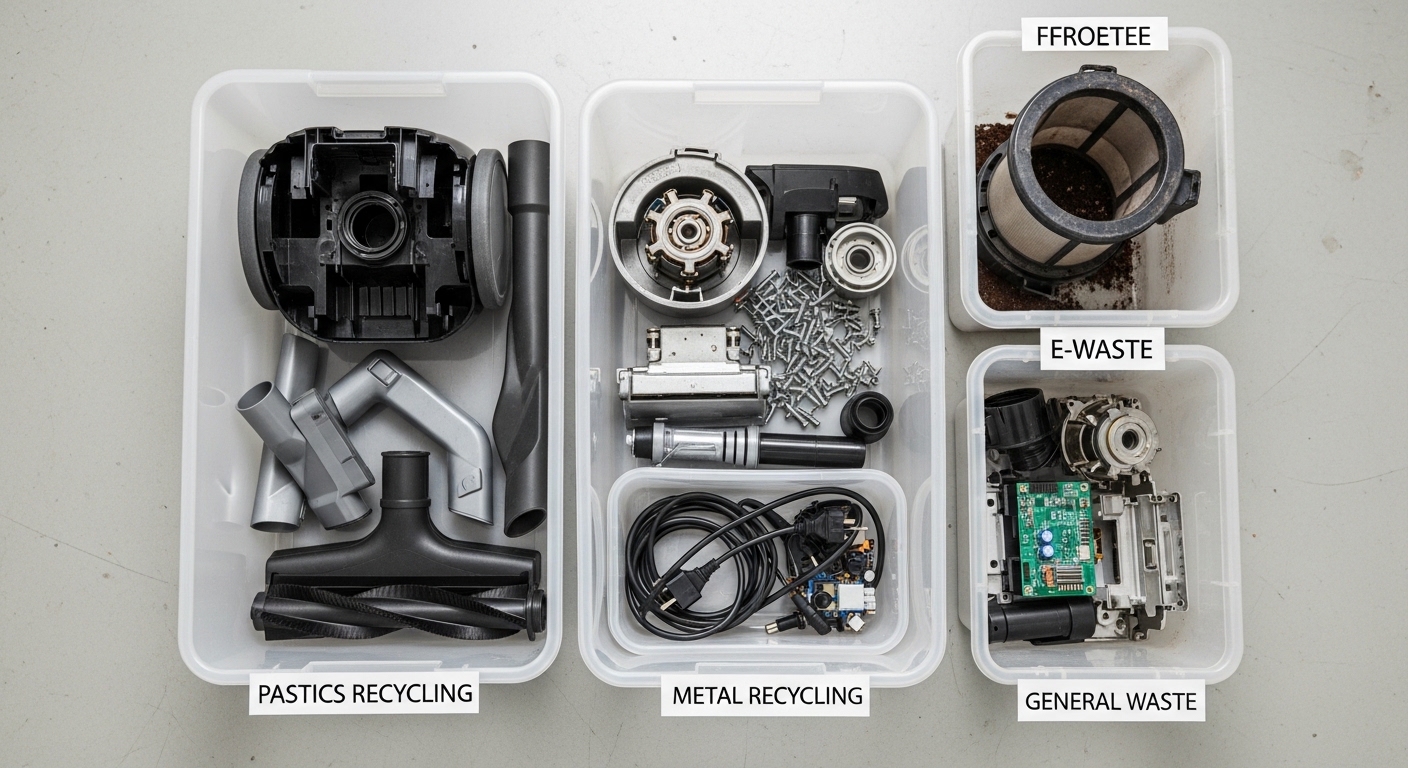
Most vacuums have several parts that can be recycled. Here’s a rough breakdown:
- Plastic housing and covers – Usually recyclable with household plastics. Check for the recycling number stamp.
- Metal parts – Screws, screws, motors, and other metal components can go to scrap metal recyclers. Steel and aluminum have value.
- Batteries – Some vacuums have removable lithium-ion batteries. These are hazardous if thrown in the trash but accepted at most electronics recycling centers.
- Filters and dust bags – These are generally not recyclable, but you can remove and dispose of them in regular waste.
Separating things first makes disposal easier and more environmentally responsible.
Step 3: Find a Local E-Waste Recycling Center
Many cities and towns have special recycling centers specifically for electronics. You can drop off your broken vacuum cleaner along with old printers, microwaves, and other small appliances. Sometimes, these centers will even pick up heavy items from your house.
Pro tip: call ahead and ask what they accept. Some places will only take certain brands or require you to remove batteries first. The EPA’s eCycling program lists certified recyclers by state, so you can avoid sketchy drop-offs that might just dump your vacuum in a landfill anyway.
Step 4: Take Advantage of Retail Take-Back Programs
Did you know some vacuum manufacturers will take back old units, even if they’re broken? Brands like Dyson and Shark sometimes have recycling programs where you can send your vacuum back, free of charge. Big-box stores like Best Buy often accept small appliances for recycling too.
It’s kinda satisfying — you drop it off and know it’s going to be disassembled responsibly. Plus, some stores give a small credit or coupon for returning old electronics. Cha-ching.
Step 5: Consider Upcycling or Repurposing
If you’re a DIY kinda person, your broken vacuum cleaner doesn’t have to just be trash. Some folks turn old motors into science projects, or housings into storage containers. Even the hose can become a weird-but-useful flexible duct for dust collection in woodworking.
It’s not a mainstream solution, but if you’ve got the creativity (or a kid who loves tinkering), this is a fun way to give a second life to what would otherwise be junk.
Step 6: Trash It Only as a Last Resort
Sometimes, after all the recycling and repurposing options, you just gotta throw it away. If you do, try to follow local guidelines for bulky or electronic waste. Never just jam it into a standard trash can if it won’t fit — that’s a safety hazard for sanitation workers. Some municipalities require scheduling a special pickup or taking it to a landfill that accepts electronics.
Things to Keep in Mind
- Safety first: Disconnect cords, remove batteries, and make sure nothing can accidentally start up or leak fluids.
- Documentation: Some places like to see proof you live in the city or proof of the item’s electronic nature. A small tip: keep receipts if you’re using a retailer take-back program; sometimes they ask.
- Environmental impact: Every vacuum you dispose responsibly is one less piece of e-waste poisoning the environment.
Real-World Examples
- A household in Portland, Oregon, recycled over 100 pounds of electronics in one year, including broken vacuums, through their city e-waste program. That’s roughly 50 vacuums worth of landfill diversion.
- Dyson’s official recycling program reports that 90% of returned units get disassembled and separated into recyclable metals, plastics, and batteries. Imagine the amount of raw materials that can be salvaged instead of mined anew.
Quick Comparison Table
| Disposal Method | Environmental Impact | Effort | Cost |
|---|---|---|---|
| E-Waste Recycling Center | Low | Medium | Free |
| Manufacturer Take-Back | Very Low | Low | Free |
| DIY Upcycling | Very Low | High | Minimal |
| Regular Trash | High | Low | Free |
Final Thoughts
Disposing of broken vacuum cleaner doesn’t have to be a mystery or a hassle. You just gotta think a little ahead, separate what you can, and know where to take it. It might feel like overkill to some people, but every responsibly disposed vacuum means less e-waste, less toxic leakage, and a slightly cleaner planet. So next time you’re staring at that old machine, don’t sigh — plan your next steps, recycle what you can, and maybe even get a little creative with the leftover parts.
After all, no one wants to be remembered as the person whose garage became a shrine to dead appliances. Take action, make it count, and maybe, just maybe, that old vacuum can teach you something about resourcefulness before it finally goes away.
This method of handling your broken vacuum cleaner might take a bit more effort than dumping it in a bin, but trust me, it’s worth it. Your conscience, your community, and your future self will thank you.