

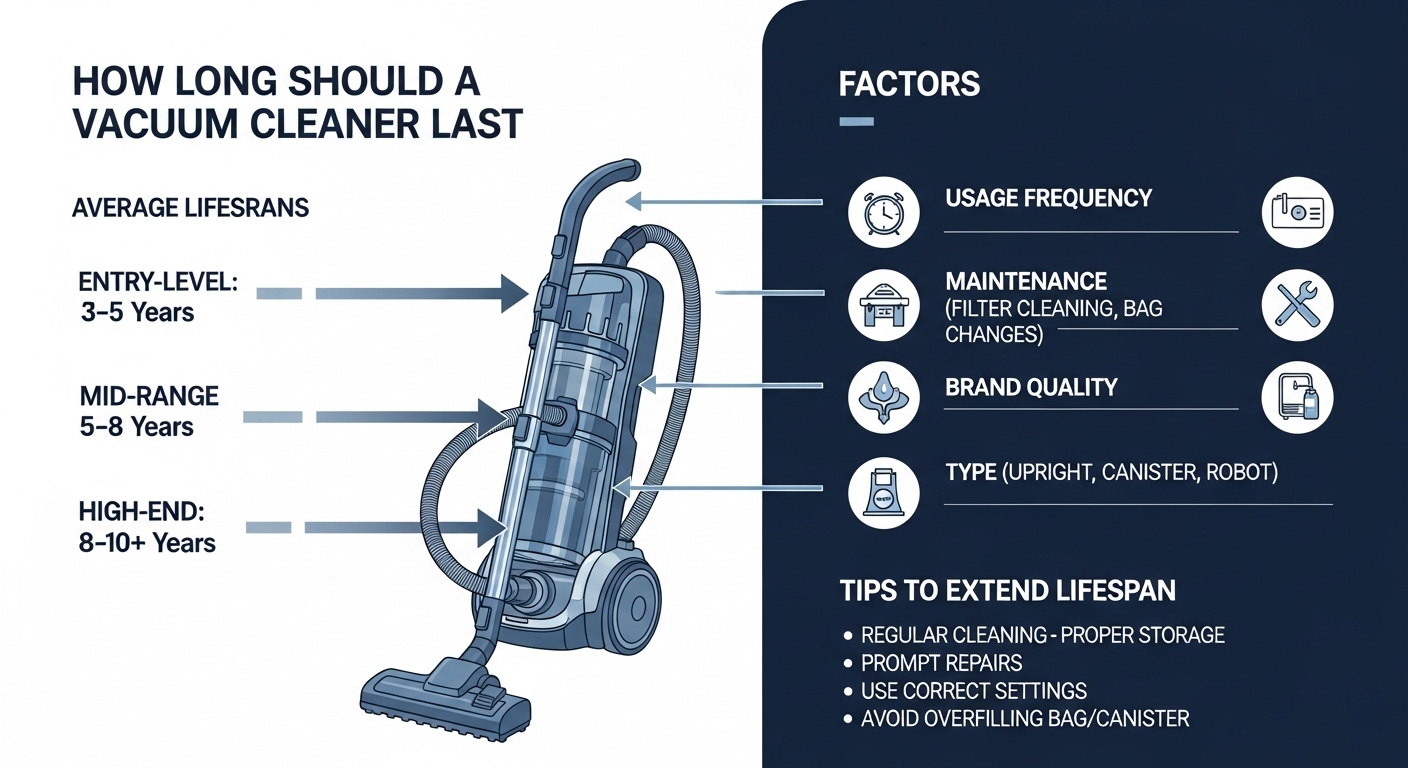
You ever stand in your living room, looking at your vacuum cleaner, wondering just how long it’s gonna keep sucking up dust before it craps out on you? I mean seriously, you paid a decent chunk of change, and the thing is supposed to last… well, how long exactly? And no, I’m not talking some vague “oh, maybe 5 years” — there’s more going on here than just plugging it in and hoping it works. The lifespan of a vacuum isn’t just about time, it’s about how you use it, what kind it is, even where you store it.
Understanding the Average Lifespan
Most vacuums, according to industry insiders and consumer reports, usually hang in there for somewhere between 8 and 12 years if you treat them semi-right. But that’s a big “if.” Cheap bagless models? You’re looking closer to 3-5 years before motors start whining and belts snapping. Big upright machines from brands like Dyson or Miele can push past a decade with the proper care, which honestly, sometimes feels like they outlive your couch.
There’s a lot of factors at play here. Motor type, for instance, is a huge one. Universal motors found in cheaper vacs are powerful but tend to overheat quicker. Then you got canister vacs, often with longer-lasting induction motors. There’s also the classic corded vs cordless debate — lithium-ion batteries degrade over time, usually after 3-6 years depending on charging habits. So even if the vacuum’s motor is fine, a dead battery on a cordless model might make you feel like the whole thing’s junk.
Signs Your Vacuum Cleaner Is Nearing the End
Ok, so you’re asking yourself, “how long should a vacuum cleaner last?” but let’s be real, sometimes the answer isn’t a number but a list of warning signs. Here’s what to watch for:
- Decreasing suction power – If it feels like it’s sucking more air than dirt, your vacuum’s definitely struggling. Sometimes it’s just a clogged filter, but other times it’s the motor on its way out.
- Loud, unusual noises – A whining, rattling, or grinding sound often means bearings or brush rollers are shot.
- Burning smells – If you get a weird burning plastic or motor smell, unplug it fast. That’s not “it’s working harder,” that’s “it’s dying.”
- Excessive overheating – Your vacuum shouldn’t be scorching hot after 5 minutes of use.
Even if your vacuum looks fine on the outside, these signs can creep up gradually. I’ve seen vacs limp along for months before finally giving out, and it’s like, man, I should’ve noticed sooner.
Factors That Influence Vacuum Lifespan
There’s more than just “cheap vs expensive” when it comes to longevity. Here’s some stuff that actually matters:
- Frequency of use – A vacuum used daily in a busy household will wear out faster than a weekend-only apartment vacuum.
- Floor types – Hardwood is easier on belts and brushes than thick shag carpet or rugs with fringe.
- Maintenance – Cleaning filters, emptying bags, untangling hair — sounds basic, but skipping these steps can cut lifespan in half.
- Storage conditions – Leaving a vacuum in a damp basement or hot garage isn’t gonna help. Humidity and heat accelerate motor and belt degradation.
So yeah, the vacuum you treat like a disposable gadget is gonna have a way shorter life than one you actually pay attention to.
How Maintenance Extends Life
If you actually want your vacuum to last longer than the “barely getting by” stage, maintenance is key. Stuff like:
- Regular filter cleaning – HEPA or foam filters need rinsing or replacing regularly, or suction drops fast.
- Check belts and brush rollers – Hair and string get wrapped around brushes, eventually causing the motor to strain. Replacing belts is cheap, easier than buying a whole new unit.
- Empty the dustbin or bag often – Not doing this is basically starving your vacuum, forcing it to overwork.
- Inspect hoses – Cracks, leaks, or blockages reduce efficiency dramatically.
Think of it like your car: neglect oil changes, and it’s toast. Same with vacuums, just less exciting, more dust.
Average Lifespan by Type
Different vacuums age differently. Here’s a rough guideline:
| Type of Vacuum | Average Lifespan | Notes |
|---|---|---|
| Upright | 8-10 years | Heavier on motors, easy maintenance |
| Canister | 10-12 years | Often more durable motors, versatile |
| Stick/Cordless | 3-6 years | Battery life usually limits total lifespan |
| Robot | 3-5 years | Sensors and battery tend to fail first |
| Handheld | 4-7 years | Light use, but battery replacement can be tricky |
Obviously, how you treat it can make these numbers vary. Some Dyson cordless vacs last nearly a decade if you swap batteries, which is kinda wild when you think about it.
Real-World Examples
I had a friend who bought a $400 bagless upright in 2010. She’s still using it today… sort of. She’s replaced the belt twice, changed filters every 6 months, and cleaned the brush rollers like a lunatic. Motor is strong, still picks up everything. Contrast that with my old $80 stick vacuum from 2016 that barely lasted 2 years before the battery went kaput. The difference? Maintenance, build quality, and honestly, a bit of luck.
Data from Consumer Reports shows that about 60% of vacuum users report major malfunctions within the first 5 years if they don’t maintain them. But with regular upkeep, only 15-20% have issues. So the math’s pretty clear: love your vacuum, it’ll love you back.
When It’s Time to Replace
Sometimes, no matter how careful you are, vacuums reach their expiration date. Replace it if:
- Suction is irreparably weak
- Motor or electronics fail repeatedly
- Cost of repairs exceeds the price of a new unit
Even then, sometimes buying a new vacuum is actually cheaper in the long run than constantly replacing belts, brushes, and batteries. Think about the hours of cleaning efficiency lost with a struggling vacuum — it’s a silent productivity killer.
Pro Tips to Maximize Longevity
If you really wanna squeeze every last year outta your vacuum, here’s some pro advice:
- Rotate tools – Don’t just use the floor brush; occasionally switch to crevice tools to prevent motor strain.
- Clean after each use – Might seem OCD, but removing hair, dirt, and lint keeps airflow optimal.
- Store upright in a cool, dry place – Moisture is your vacuum’s nemesis.
- Replace consumables – Belts, filters, and brushes wear out faster than you think. Don’t skip it.
- Avoid extreme debris – Rocks, sand, or wet dirt are like little motor assassins.
The Bottom Line
So yeah, the real answer to “how long should a vacuum cleaner last” isn’t a single number. It’s a mix of type, usage, and care. Treat it like a gadget you kinda actually need to pay attention to, and you’ll get a decade or more. Ignore it, or just grab the cheapest one at the store, and it’s more like 3 years max.
At the end of the day, vacuums are weirdly like pets — they need a little love, attention, and occasional maintenance to survive in your home ecosystem. And if you keep that in mind, you might just get that long-lasting, dust-free magic machine humming in your living room for years longer than you’d think.