

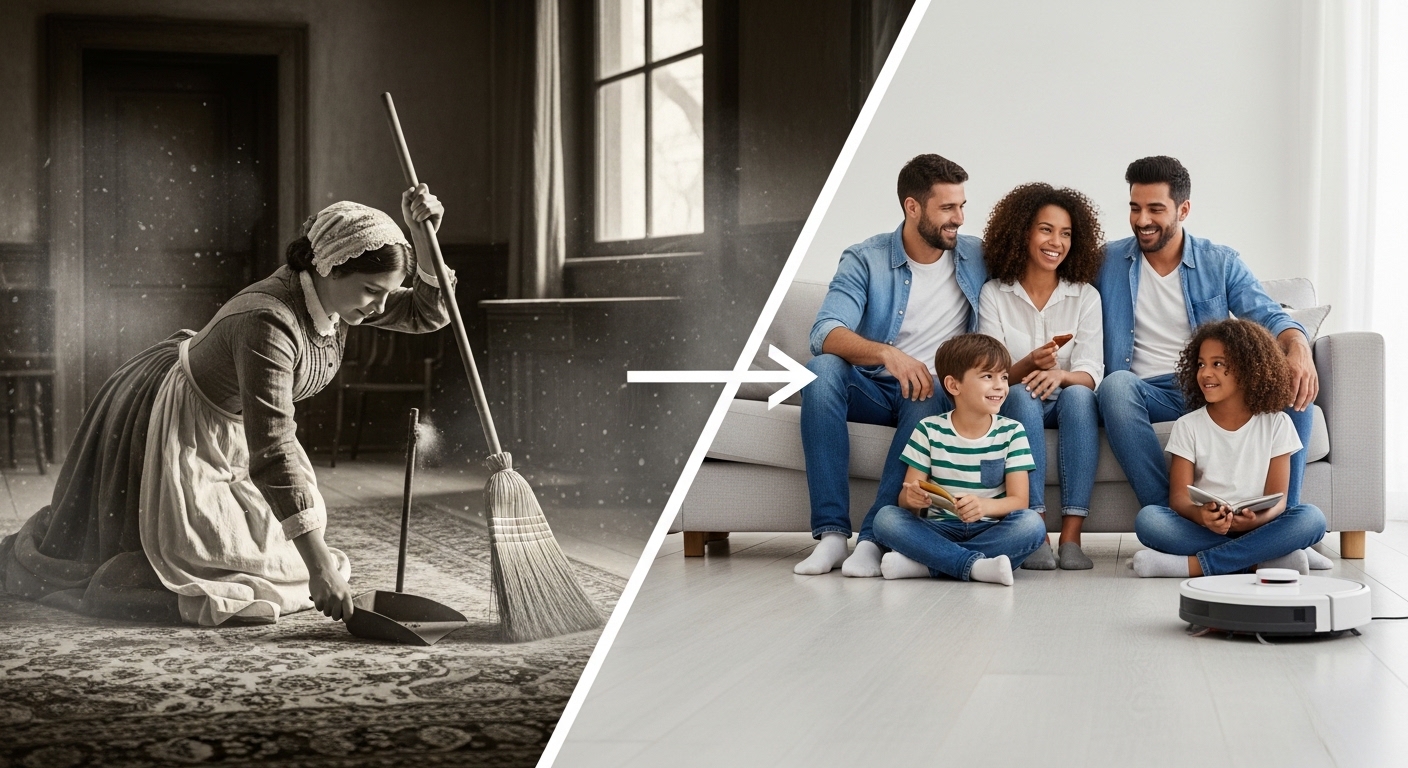
You ever stop mid-cleaning, looking at that humming machine in your hand, and kinda wonder… how did the vacuum cleaner impact society anyway? I mean, it’s just a weird little box on wheels that eats dust, right? But honestly, it’s done a heck of a lot more than just sucking up crumbs. If you’ve ever groaned about dragging out the broom or shaking rugs outside in winter, you already know the subtle magic it brought into homes worldwide.
The Early Days: When Hoovers Weren’t Just Fancy Boxes
Before electric vacuums, cleaning wasn’t a “five-minute chore.” Nope. People had to sweep, beat, or literally shake carpets to death just to get rid of dust. The first motorized vacuum came around the early 1900s, and it was like introducing a rocket to someone who’d only ever walked. In 1901, Hubel & Arther created a primitive suction device, but it was James Murray Spangler, a janitor from Ohio, who patented a portable electric vacuum in 1908. Fun fact: he literally sold the patent to William Hoover, which is why we still call them Hoovers in the UK. That’s kinda funny if you think about it—some dude’s janitor invention now defines cleaning vocabulary across countries.
The invention didn’t just make floors clean. It changed labor, social habits, and even architecture. Before vacuums, houses often had bare floors in main rooms and heavy rugs in private areas. Carpet manufacturers and interior designers had to rethink materials because cleaning suddenly wasn’t a death sentence.
Workload Shift: Cleaning Isn’t Just a Backbreaker Anymore
Think about the time it takes to sweep a 2,000-square-foot house versus rolling a vacuum back and forth. That difference? Massive. In fact, studies from the mid-20th century showed that households cut cleaning time by about 60% with early electric vacuums. That’s huge if you’re the person who used to lug around a broom and dustpan like a medieval warrior.
And it didn’t just make life easier for homeowners. Domestic work, especially for women, saw a noticeable shift. If you read through old census and labor records, you’ll notice that time spent on “housekeeping” dropped steadily from the 1920s to the 1960s, and the vacuum is often cited as a key contributor. It gave people, particularly women, a sliver of time they could use for education, work outside the home, or just… breathing without grit in their teeth.
Economic Ripple: Vacuum Sales and Job Creation
You might think vacuums just appeared on shelves, but the reality is more complex. When Hoover and other brands like Electrolux and Kirby got serious, they created entire industries. Salesmen, repair shops, replacement parts, and even demonstration teams became a thing. Door-to-door vacuum selling in the 1930s wasn’t just marketing—it was basically a job-creation engine. Some families made entire livelihoods out of selling and servicing these machines.
Even today, the vacuum market is enormous. Global sales are projected to exceed $15 billion by 2027, with robotic vacuums contributing a fast-growing slice. So, what started as a labor-saving contraption is now a multibillion-dollar ecosystem supporting engineers, marketers, and repair technicians.
Health Impacts: Dust, Allergies, and Asthma
We don’t usually connect a vacuum to health, but it’s huge. Before vacuums, dust, pollen, and mites built up in homes unchecked. With vacuuming, indoor air quality improved significantly. According to the Asthma and Allergy Foundation of America, using HEPA filters can remove up to 99.97% of particles as small as 0.3 microns. That’s like tiny ninjas eliminating allergens before they make you sneeze or wheeze.
Even more surprisingly, some early 20th-century doctors recommended regular vacuuming as a preventive health measure. Sounds kinda funny now, but back then, it was a legit tip for avoiding respiratory illnesses. So, every time you roll that machine over your carpet, you’re doing more than cleaning—you’re fighting off invisible micro-invaders that could make your sinuses revolt.
Cultural Shifts: Clean Homes, Social Status
Vacuum cleaners also changed how society viewed cleanliness. A spotless carpet became a symbol of modern living, efficiency, and status. In mid-century advertisements, you’d see perfectly coiffed housewives effortlessly pushing vacuums around while children played in pristine rooms. It wasn’t just about hygiene; it was messaging: “If you own this, you’re civilized, modern, and responsible.”
Even architecture responded. Homes started incorporating larger carpeted areas, central vacuum systems, and layouts that made vacuuming easier. The vacuum subtly influenced how rooms were designed, how families spent time, and even how neighbors judged one another.
Technology Evolution: From Bag to Robot
The vacuum cleaner didn’t just stop at sucking up dust. Over decades, it evolved from heavy, wheeled monsters to lightweight, cordless, bagless marvels. Dyson, for example, revolutionized suction tech and bagless design in the late 20th century, and robotic vacuums like Roomba now navigate homes autonomously.
This evolution also democratized cleaning. Whereas only some households could afford early electric vacuums, today even apartments and dorms can enjoy automated cleaning. That’s a huge societal impact: access to labor-saving devices isn’t just for the wealthy anymore. Everyone gets a little extra time for work, leisure, or sleep.
Environmental Considerations: Energy and Waste
It ain’t all glittery though. Modern vacuums consume electricity, contribute to e-waste, and produce disposable parts. Some studies estimate that an average vacuum consumes 300–500 kWh over its lifetime, depending on usage. The push toward more energy-efficient and long-lasting models reflects society’s growing awareness of sustainability.
Interestingly, the same tech that made vacuums smarter also allows manufacturers to track energy efficiency, filtration performance, and even dust levels. It’s like your vacuum became a tiny environmental monitor. Who knew cleaning could get so… scientific?
Real-World Examples: Vacuums Changing Lives
- Hospitals: HEPA-filter vacuums reduce cross-contamination, protecting patients from airborne bacteria.
- Schools: Automated floor cleaners help janitors focus on other critical tasks.
- Elderly care: Robotic vacuums give seniors independence and reduce injury risk from manual cleaning.
Even in disaster zones, portable vacuums help clean debris, mold, and dust, showing their utility beyond ordinary domestic life.
The Psychological Effect: Clean Floors, Clear Mind
Here’s something you might relate to: walking barefoot on a freshly vacuumed carpet gives a weirdly satisfying sense of accomplishment. Psychologists link clean environments to reduced stress and increased productivity. The vacuum cleaner, therefore, isn’t just a tool—it’s a tiny happiness generator. A simple machine that affects mood without you even realizing it.
So next time you plug in your vacuum, think about it: it’s a little societal transformer. It shaped labor, gender roles, health standards, architecture, economics, and even mental wellness. Not bad for a box that literally eats dust.
Conclusion: More Than Just Suction
The question of how did the vacuum cleaner impact society can’t be answered with just one angle. It’s a story about technology meeting daily life, about convenience shaping culture, and about a machine that quietly reshaped the rhythm of human labor. From improving health to changing interiors and even influencing social hierarchies, its legacy is everywhere you look—under your feet, in your lungs, and in the tiny bit of free time you didn’t have before.
In the end, it’s funny to think a thing we often take for granted has left such a wide-reaching mark on society. You’re not just cleaning—you’re participating in a long historical chain that transformed the way humans live, work, and even think about cleanliness itself. The humble vacuum, it turns out, is a small but mighty social revolution you roll around your living room every week.