

So, you’re standing there in your living room, staring at that clunky machine that somehow manages to suck up all the dust bunnies hiding under your couch cushions, and you wonder, how the heck does a vacuum cleaner actually work? I mean, you push it around, listen to it roar, and magically the floor looks cleaner, but what’s happening inside that thing? Let’s dig into it, ’cause it’s way more than just a fan spinning inside a plastic shell.
Vacuum cleaners, at their core, rely on creating a difference in air pressure. Think of it like this: air naturally wants to move from high-pressure zones to low-pressure zones. When you turn on your vacuum, the motor starts spinning, usually driving a fan that whips the air inside into motion. This spinning fan reduces the air pressure in the vacuum’s chamber, basically creating a mini void. The higher pressure outside the vacuum then pushes air—and all the dirt floating around with it—into the vacuum. Yeah, it’s kinda like how your straw works when you sip soda, but imagine the soda is replaced by dust, crumbs, and probably that one Lego piece your kid swears vanished into thin air.
The Anatomy of a Vacuum Cleaner
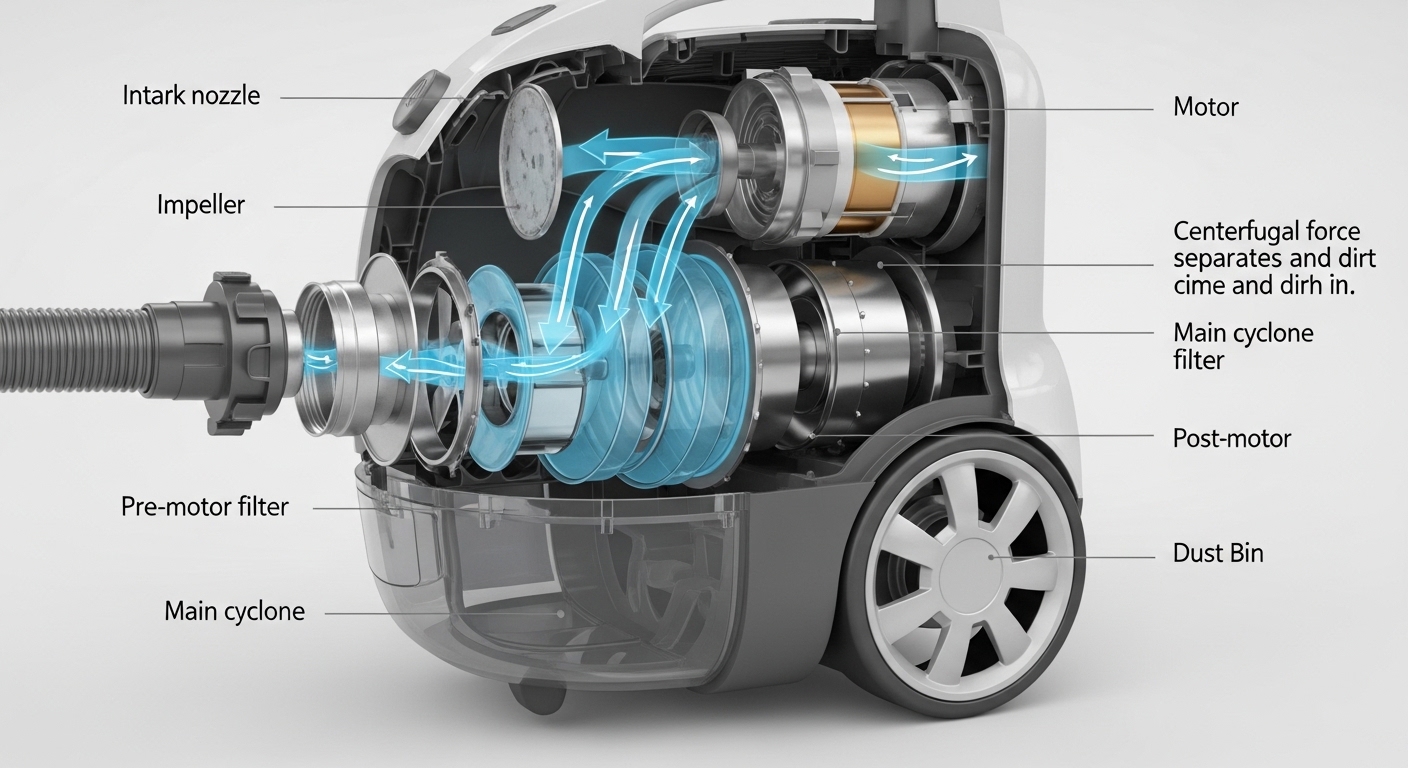
Now, let’s talk about the parts inside that make the magic happen. You’ve got:
- Motor: This is the heart of the vacuum, the thing that makes all the air movement possible. Most home vacuums use universal motors that can spin crazy fast, sometimes up to 30,000 rpm.
- Fan: The fan is attached directly to the motor, and its job is to create that airflow I mentioned. The shape and size of the fan blades really determine the vacuum’s suction power.
- Intake Port: This is where your dust and debris first enter the vacuum. Ever notice how your vacuum works better on bare floors than on shag carpet? That’s often because of the size and design of the intake.
- Filter: This is crucial. Without it, all the dust would just get blown back into the room. Modern vacuums often use HEPA filters, which can trap particles as tiny as 0.3 microns. That’s small enough to catch most allergens and pollen.
- Dust Container or Bag: Once the air has passed through the filter, the debris is collected here. Bags are traditional, but most new models just have a bin you empty.
So yeah, each piece has a role, and it’s a bit like a tiny factory happening every time you push the vacuum over your rug.
Suction Power: What Really Matters
People talk about “suction power” like it’s the only thing that counts, but honestly, there’s more nuance than just watts or pascals. Suction is technically measured in airwatt, which combines airflow and vacuum pressure. Here’s a simple breakdown:
| Term | What it Means | Why it Matters |
|---|---|---|
| CFM (Cubic Feet per Minute) | How much air moves through the vacuum | High CFM = more dirt can be pulled from wide areas |
| Water Lift (inches) | How strong the vacuum can pull against gravity | High water lift = better for thick carpets and heavy debris |
| Airwatt | Combination of airflow and suction | Gives a more realistic idea of cleaning efficiency than just motor wattage |
A vacuum with crazy suction but poor airflow will just spin and hum and never pick up much. It’s the combo that makes your floors clean.
Brushes, Rollers, and the Dance of Dirt
Most vacuums aren’t just about sucking air. That rotating brush at the bottom? Yeah, that’s doing a lot of the heavy lifting. On carpets, dirt embeds itself deep in fibers, and the brush agitates those fibers to loosen particles so the vacuum can pull them up. Some vacuums even have tangle-free brush designs to prevent hair from gumming up the works—trust me, if you’ve ever pulled out a sticky mess of dog hair and dust, you know why that’s a blessing.
There’s also the issue of surfaces. Hard floors vs carpets require different approaches. Some vacuums have adjustable brush heights or even separate modes for tiles, hardwood, and shag carpets. It’s not just fluff; matching the brush speed and suction to the surface keeps your floors safe and your vacuum efficient.
Dirt Path and Airflow: The Secret Inside
You might not think about it, but the path air takes inside the vacuum is like a mini highway. The smoother the path, the more efficiently dirt travels. Some cheap vacuums have lots of bends, filters jammed in awkward spots, or too many components in the airflow path—resulting in less suction. More expensive models often have streamlined tunnels and cyclonic separation, which spins dust and debris into a bin without clogging the filter too fast. Cyclone tech is kinda genius—it basically spins the dirt out of the air before it even gets to the filter.
Common Misconceptions
People say stuff like “I need a stronger vacuum to get the carpets clean,” but often, it’s about the right tool, not brute force. A stick vacuum might feel weak, but if it’s designed for your floor type and has proper airflow, it can outperform a high-wattage unit that isn’t tuned right.
Another misconception is that all dirt is visible. Nope. A lot of vacuuming is about microscopic particles—dust mites, pollen, mold spores—that you literally can’t see. That’s why HEPA filters matter. They trap these tiny nasties and improve air quality. Studies show that regular vacuuming with HEPA filters can reduce allergen exposure by up to 60%.
The Evolution of Vacuum Cleaners
Vacuum cleaners have come a long way. The first motorized vacuum, invented by Hubert Cecil Booth in 1901, was huge—it needed horses to pull it around. Imagine that in your living room. Modern vacuums are compact, lightweight, and some even robotic. Brands like Roomba popularized the idea of automated vacuuming, using sensors, cameras, and algorithms to navigate your home while you binge-watch TV.
Cordless models changed the game too, making maneuvering stairs and furniture way less of a hassle. But even with all the tech, the fundamental principle hasn’t changed: moving air creates suction, and suction moves dirt.
Maintenance Tips That Actually Work
If you want your vacuum to work like day one, maintenance isn’t optional. Some quick tips:
- Empty the dust bin or change the bag regularly. A clogged container = less suction.
- Clean or replace filters. HEPA filters usually last 6–12 months depending on use.
- Check the brush roll for hair and fibers every few weeks.
- Inspect hoses for blockages. A single clog can drastically reduce suction.
Treating it well keeps that little motor happy and prevents the dreaded “sucks less over time” problem.
Why Understanding Your Vacuum Matters
Knowing how a vacuum cleaner works isn’t just trivia—it helps you pick the right one, use it effectively, and troubleshoot issues. Next time your vacuum struggles on the shag rug, you can guess whether it’s a filter, brush, or suction problem instead of just blaming the machine. Plus, there’s a weird satisfaction in watching that motor spin and knowing the science behind it—it’s like a mini physics lesson on your living room floor.
Vacuuming isn’t just mindless labor; it’s physics, engineering, and a little bit of magic all rolled into one humming, whirring machine. Understanding the motor, airflow, suction, and brush mechanics gives you more than just clean floors—it gives you insight into the little powerhouse you probably underestimated all along.
So next time you push that vacuum around, remember: you’re not just cleaning dust, you’re orchestrating a small symphony of air pressure, cyclones, and filters. And yeah, it’s kinda cool when you think about it like that.