

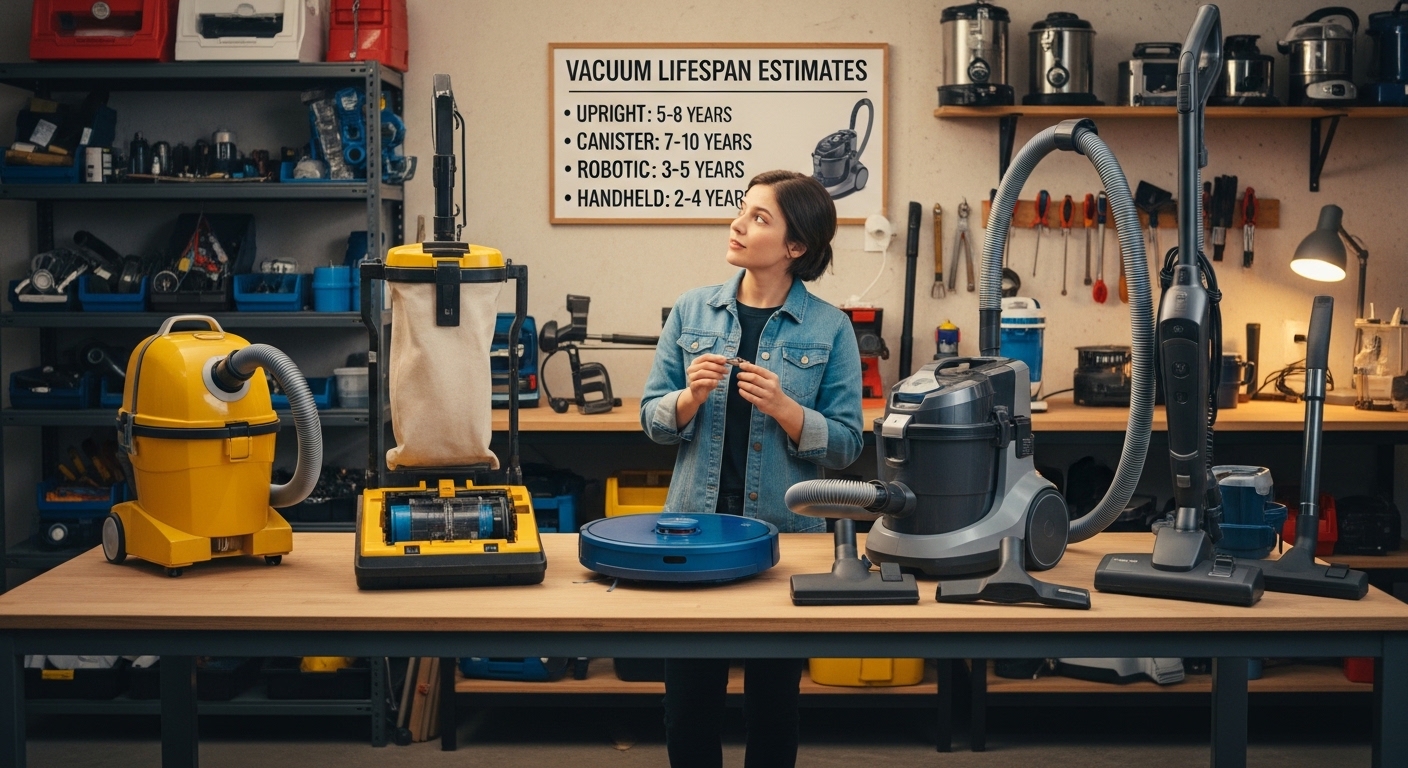
You ever been standin’ there in your living room, bag in one hand, cord all tangled, wonderin’ just how long does a vacuum cleaner last before it finally croaks and you gotta toss it? Yeah, I’ve been there too, pokin’ at the brush rolls, listenin’ to that weird motor hum, thinkin’ maybe I just cleaned wrong or maybe it’s dying slowly like some kinda household pet. It’s weird, ‘cause vacuums are supposed to be these trusty sidekicks that just… work, but somehow they seem to have secret lifespans you’re not told about when you buy ‘em.
Average Lifespan of a Vacuum Cleaner
So let’s talk numbers. On average, a standard upright vacuum tends to live somewhere around 8-10 years if you’re not abusing it. But hold on—“average” can be super misleading. Like, I’ve seen cheap models start dying at year two, belt snapping, suction going all sad. At the same time, those fancy Dyson-types or Miele ones? Yeah, people swear they still hum along after 15+ years. The big factor isn’t just price, it’s how you treat it.
| Type of Vacuum | Typical Lifespan | Notes |
|---|---|---|
| Upright | 8–10 yrs | Regular maintenance = key |
| Canister | 10–12 yrs | Often more durable motors |
| Robot | 3–5 yrs | Batteries degrade faster |
| Handheld | 4–6 yrs | Frequent charging cycles |
| Stick/Cordless | 5–8 yrs | Lithium batteries die eventually |
Notice how robot vacuums and cordless sticks are kinda the short-lived cousins? It’s mostly the battery chemistry and constant recharging. Even the most high-tech motor won’t help if the battery is basically toast after a few years.
What Really Kills Your Vacuum
You’d think dirt and dust are the worst enemies, but nope. The sneaky killers are actually neglect and improper use.
- Overstuffed bags or filters – when the airflow’s blocked, motors get hot and start stressing out.
- Clogged brush rolls – hair, string, weird confetti from kids’ projects… all of that slowly jams the system.
- Skipping maintenance – belts, brushes, filters, and sometimes even bearings need a check every few months.
- Vacuuming liquids or sharp debris – unless it’s a wet/dry model, this’s basically a death sentence.
One guy I know was vacuuming up some broken glass once. Motor smoked, smell of burnt electronics lingered for days. It was tragic.
Signs Your Vacuum Cleaner is Nearing the End
You don’t need a PhD in appliances to notice when your vacuum is on its last legs. Some of the giveaways are subtle, some more obvious:
- Decreased suction even after emptying bag/filter
- Strange grinding noises or squeaks
- Overheating and shutting off mid-clean
- Burnt smell coming from motor area
- Brush roll not spinning properly
Fun fact: some vacuums will actually survive a bit longer if you baby them once they start showing signs. Like, replacing belts or filters might add a year or two to its life.
Maintenance Tips to Extend Lifespan
If you’re looking to squeeze as many years outta your vacuum as humanly possible, here’s the lowdown:
- Empty the bag or bin frequently. Seriously, don’t let it pile up.
- Clean or replace filters regularly. HEPA filters? Yeah, those need attention.
- Check belts and brush rolls. Hair wrap? Remove it every few uses.
- Avoid vacuuming liquids or heavy debris unless it’s designed for that.
- Store properly. Don’t just throw it in the corner of the garage where dust itself can suffocate the motor.
A small investment in parts—belts, filters—can feel annoying, but it often costs less than buying a whole new vacuum, and you get extra years outta the one you already paid for.
High-End vs. Budget Vacuums
There’s always the debate: cheap vacuum or fancy one? Here’s the thing—price kinda correlates with lifespan, but not always.
- Budget vacuums (sub-$150) are usually fine for light, occasional use. Expect 4–6 years before things start breaking.
- Mid-range ($200–$400) often hit the sweet spot for 7–10 years, decent build quality, and decent parts availability.
- Premium models ($500+) can last 10–15 years if maintained. Miele’s motors, for example, are known to survive decades. Dyson? Batteries might need swapping every 3–5 years, but motors can last way longer.
In a way, sometimes spending more upfront actually saves money in the long run—less replacements, fewer headaches.
Real-World Example
Take my buddy’s house. He got a cheap stick vacuum for like $80 five years ago. At year two, the brush motor died. Replaced it, kept using, then at year four, battery completely useless. Now he’s got a Miele canister that’s been running for 12 years without a hiccup. Shows you maintenance + quality = longevity.
Another example: robot vacuums are weird. A Roomba might last 4–5 years before the battery loses capacity. People keep trying to replace batteries, but after a while, software updates make it glitchy. It’s like your vacuum is aging but also acting grumpy.
Tips for Buying a Long-Lasting Vacuum
If you’re in the market, here’s some stuff you should check:
- Motor warranty: some vacuums have 5–10 year motor warranties
- Availability of parts: belts, filters, brush rolls
- Battery type for cordless: lithium-ion is better than older NiCad
- Build quality: metal parts > cheap plastic
- Noise and ergonomics: small, but if you hate lifting it, you won’t use it properly
Basically, think of it like buying a car. Some parts will eventually need attention, but you want a model that won’t throw tantrums every six months.
Do Cordless Vacuums Last Less?
Yeah, kinda. Cordless stick vacuums and handhelds are popular because they’re convenient, but batteries degrade. Even if motor is fine, you might find it barely runs 10–15 minutes after a few years. Some brands allow battery replacements, which can double the life, but not all. So don’t expect a 12-year cordless vacuum, usually more like 5–8 if you’re lucky.
Conclusion
So how long does a vacuum cleaner last? Honestly, it’s a mix of quality, maintenance, and luck. A cheap vacuum used gently might die in 4–5 years. A well-built, properly maintained upright or canister could happily hum for 10–15 years. Cordless and robot vacuums are usually shorter-lived because of batteries, but replacing the battery can extend their lives.
If you treat your vacuum like the minor household hero it is—clean the filters, unclog brush rolls, avoid abuse—you’ll get the most mileage possible. And remember, sometimes spending a bit more upfront saves years of frustration. So next time you’re vacuuming and wondering if it’s time to upgrade, check the basics first: the motor, the belt, the suction. Sometimes it’s not time to say goodbye, just a little TLC away from another few years of service.
In the end, vacuums aren’t immortal, but with a bit of attention, they can feel like they almost are.