

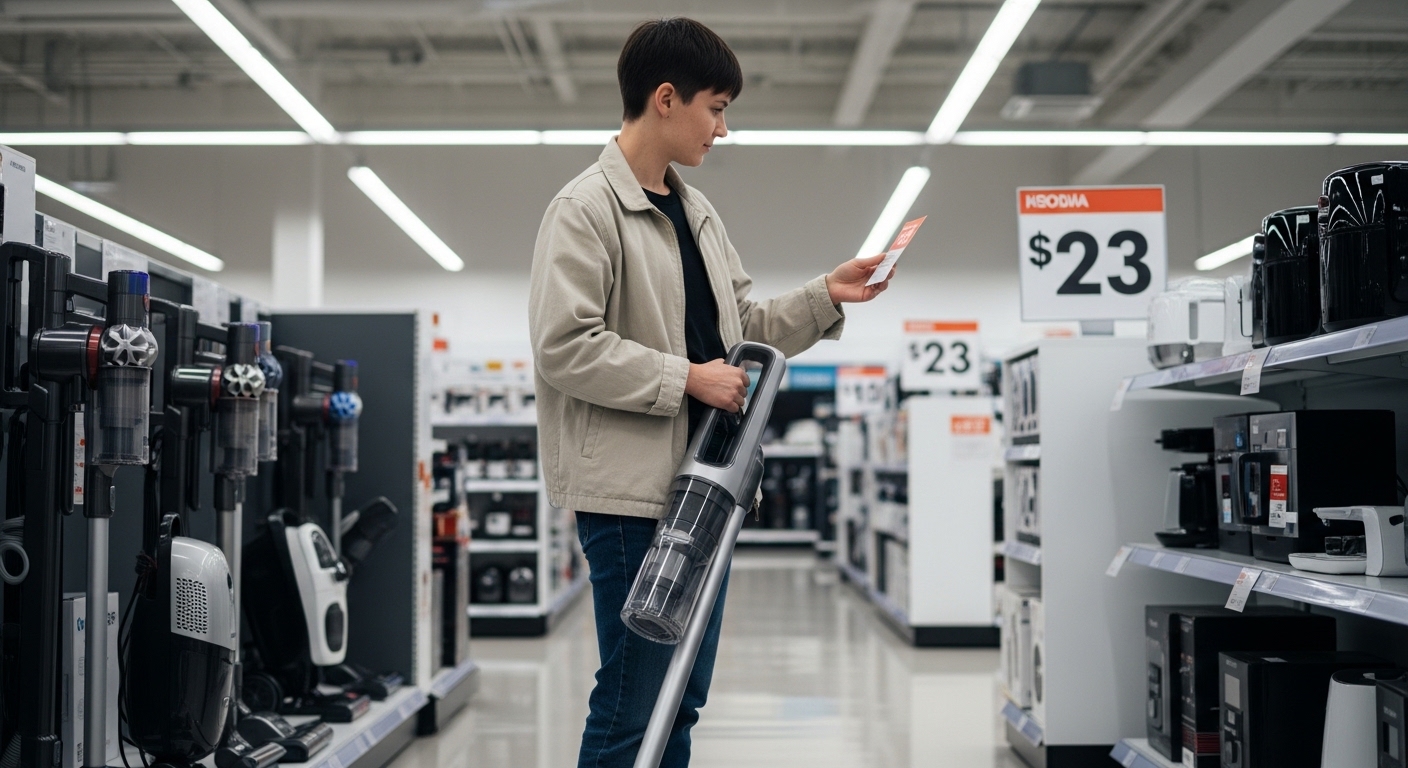
I was just in the middle of tripping over my own dust bunnies the other day, thinking, “okay, seriously, how much is a vacuum cleaner these days?” And lemme tell ya, it’s not as simple as just picking one off the shelf. You got all these brands, sizes, types—cordless, upright, canister, robot thingies—and each one’s got its own price tag that kinda makes your wallet go, “wait, what?” So if you’re like me, staring at a million options, trying to figure out what actually makes sense for your home, this is gonna be your little survival guide.
The Price Spectrum You’re Looking At
First off, let’s get real about numbers, ’cause otherwise we’re just guessing. The cheapest vacuum cleaners, usually basic stick or small canister types, start around $50-$70. They’ll do the job okay-ish, but don’t expect miracles on thick carpet or long hair. Then you got your mid-range models, which are usually $150-$300, and these often have better suction, more attachments, and sometimes that extra techy stuff like HEPA filters or some kind of self-cleaning brush roll. High-end vacuums, think Dyson, Miele, or those fancy robot cleaners, can easily run $400-$1,000 or even more. And yes, I know, that number makes you wanna spit out your coffee.
But it’s not just the initial price that matters. There’s the maintenance, bags, filters, and if it’s a cordless one, the battery replacement. For example, a Dyson V11 or V15, brand new, might cost $600-$700, but replacing the battery after a few years could be another $100 or so. And those little filters? They’re not cheap either. So when you’re asking “how much is a vacuum cleaner?” you gotta think lifetime cost, not just the sticker price.
Types of Vacuum Cleaners and What They Cost
Upright Vacuums
These are the classic, big-boy models. They’re good for big spaces and thick carpets. Prices here range from $100 for a basic model up to $600-$700 for the premium stuff. The fancy ones usually have bagless tech, adjustable suction, and LED lights on the brush head so you can see dust in dark corners—kind of a fun little OCD feature.
Canister Vacuums
Smaller, more maneuverable, better for stairs and drapery. They often cost $150-$400. Some high-end Miele or Sebo canister vacs even hit $800+, but the suction and build quality are pretty serious. They tend to last forever if you don’t abuse ‘em.
Stick Vacuums
These are the “grab and go” type, lightweight, cordless or corded. Starting at $50 for the cheap ones, mid-range around $200-$350, and high-end (Dyson or Shark, mostly) around $500-$700. Battery life and suction are the main trade-offs here. Short battery? You’ll end up making two trips to finish your apartment.
Robot Vacuums
These are the ones that kinda feel like cheating at cleaning. Prices start around $150-$200 for basic models, but if you want something that maps your house, avoids the cat, and has super smart navigation, expect $500-$1,000+. Roombas, Roborocks, and Ecovacs dominate here. Real talk: some of the fanciest ones even empty their own dustbin now—yeah, humans are basically obsolete in some houses.
Handheld Vacuums
Tiny, cheap, but lifesavers for car interiors or small messes. Usually $30-$150. Don’t expect them to handle your living room carpet unless you like doing 45 passes over the same spot.
Factors That Affect the Price
So why is there such a huge difference in cost? A few things:
- Suction Power: Measured in air watts or Pascals. Higher suction usually costs more. Cheap ones might feel like you’re trying to suck up dust with a hairdryer.
- Filtration: HEPA filters or multi-layered filtration systems make allergy sufferers happy but bump up the price.
- Attachments & Accessories: Turbo brushes, crevice tools, pet hair attachments… each little gadget adds cost.
- Brand Reputation: Some brands, like Miele, Dyson, or Shark, charge more just ‘cause their name is shiny and people trust them.
- Build Quality & Warranty: If it feels sturdy and comes with a 5-10 year warranty, yeah, that’s reflected in the price.
Real-World Examples
Here’s a little snapshot of what you might actually see in stores or online:
| Type | Model Example | Approx. Price | Notes |
|---|---|---|---|
| Upright | Hoover WindTunnel 3 | $180 | Good for carpet, basic attachments |
| Canister | Miele Classic C1 | $400 | Lifetime durability, quiet motor |
| Stick | Dyson V15 Detect | $700 | Laser dust detection, cordless |
| Robot | iRobot Roomba i7+ | $800 | Self-emptying dustbin, mapping tech |
| Handheld | Black+Decker Dustbuster | $50 | Small messes, portable |
If you’re thinking “wow that’s a lot,” yeah, welcome to vacuum shopping. It’s kinda like picking a car but for dirt.
Tips to Get the Best Value
- Decide Your Priority: Suction vs convenience. If you hate dragging a vacuum around, maybe a stick or robot is worth the extra dough.
- Check for Deals: Holidays, Amazon sales, and manufacturer refurbs can save hundreds.
- Read Reviews, Not Just Ratings: A 4.5-star vacuum might suck at pet hair but shine on hardwood. Real user experience matters.
- Consider Longevity: A $400 vacuum that lasts 10 years is cheaper per year than a $100 one you replace every 2-3 years.
- Test Before Buying: If possible, push it around a store. Feels heavy? Suction weak? Don’t regret later.
Why Spending More Can Sometimes Make Sense
It’s easy to think “oh, why spend $600 when $150 works?” But sometimes, cheaper vacuums are like buying cheap shoes—they might get the job done for a while but won’t last. A premium vacuum often has:
- Better suction, meaning cleaner floors
- Longer battery life (if cordless)
- Smarter filtration for allergies
- More durable construction
So even if the price hurts upfront, it might save money and frustration in the long run.
Small Tricks to Save Money
- Buy last year’s model; tech doesn’t change dramatically every year
- Look for bundle deals (vacuum + extra attachments)
- Consider certified refurbished from the manufacturer
- Keep an eye on seasonal sales; Prime Day, Black Friday, and post-holiday clearances can drop prices big time
The Bottom Line
Asking “how much is a vacuum cleaner?” doesn’t get a simple answer, and now you see why. You can spend anywhere from $50 for a handheld stick to over $1,000 for a robot that basically thinks for you. The right choice depends on your home, budget, patience, and tolerance for dragging a heavy machine around. Think about your needs, check specs, and balance price against performance and durability.
Vacuum shopping isn’t just about getting rid of dust—it’s a tiny adventure in tech, convenience, and even a little bit of OCD satisfaction. So next time you find yourself staring at shelves, at least you’ll know that the numbers you’re seeing actually mean something, and you won’t just blindly pick the cheapest one (unless that’s really all you need).
Cleaning doesn’t have to be a war—especially if you’ve got the right vacuum for the job.