

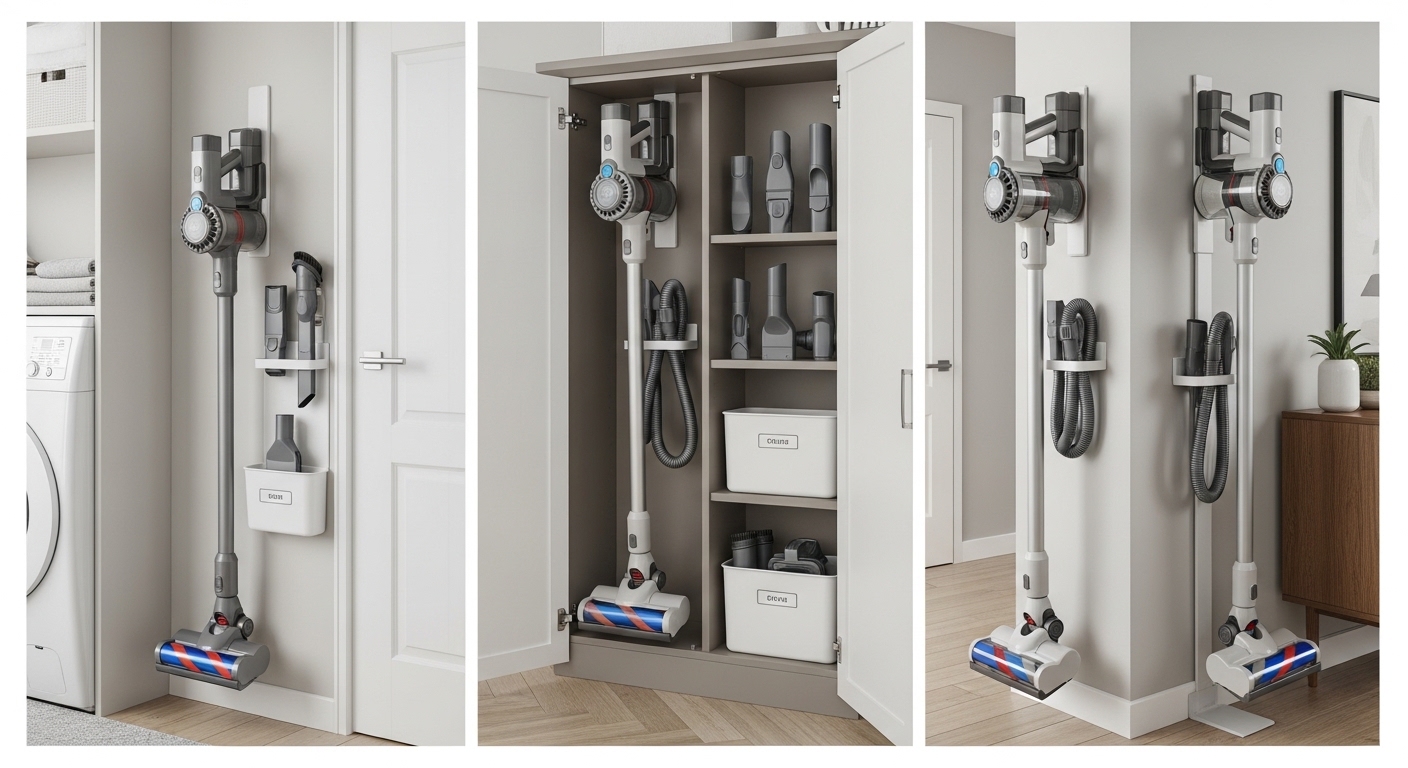
Honestly, you ever get that weird little panic when you finally clean up all the crumbs and dust bunnies only to realize you have no clue where to stash the vacuum cleaner so it doesn’t look like some giant plastic monster in your hallway? Yeah, me too. It’s one of those tiny home dilemmas nobody warns you about when you buy a vacuum but suddenly matters a whole lot when your tiny apartment or cluttered closet starts judging you silently. Storing your vacuum cleaner properly isn’t just about hiding it, it’s also about making sure it actually works the next time you need it, cuz let’s face it, a busted cord or a broken hose mid-cleaning is just tragic.
Why Storage Really Matters
Lots of folks think, “Eh, I’ll just shove it in the corner” but the thing is, vacuums aren’t just bulky, they’re kinda delicate machines too. The belts, hoses, and attachments can get twisted or crushed if you’re not careful. I read somewhere that improper storage can shorten the life of your vacuum by like, 20%—which, if you’ve dropped hundreds on a Dyson or Shark, yeah, that hurts. Plus, a messy vacuum corner is basically a dust magnet, and defeats the whole purpose of even having one.
One thing that’s often overlooked: temperature and humidity. Leaving a vacuum in a damp basement or a garage that gets super hot in summer can corrode the motor or make plastic parts brittle. Even just resting the vacuum on its hose can deform it over time. I’ve seen hoses warp so bad they don’t seal right anymore, and it’s a nightmare when your suction suddenly disappears mid-clean.
Quick Storage Tips for Every Home
Alright, so here’s where it gets practical. Not gonna lie, some of this sounds obvious, but some folks, trust me, need these reminders:
- Keep it upright whenever possible. Most upright vacuums are designed to rest like that. Even a slight tilt over months can stress the internal belts.
- Detach and organize attachments. That little crevice tool you love never finds its way back if you just leave it dangling. Consider a small basket or wall-mounted caddy.
- Cord care is underrated. Seriously. Just wrapping it loosely around the hooks provided is better than jamming it in a drawer. Avoid tight coils or knots—they strain the wires and can cause shorts.
- Dust the filter before storing. Nobody wants old dust baking inside. Gives you better suction next time.
- Hose positioning. If it’s a canister vacuum, don’t bend the hose sharply. A gentle loop or even hanging it helps prevent cracks or tears.
Honestly, some of these tips are things I didn’t learn till I had to replace an $80 hose because I was lazy. Lesson learned.
Closet, Corner, or Garage: Where Should You Actually Put It?
So you’ve got options, each with pros and cons. And let’s be real, not every apartment has a fancy utility closet.
| Storage Spot | Pros | Cons |
|---|---|---|
| Hallway Closet | Easy access, keeps vacuum out of sight | Can be cramped; might crush attachments |
| Laundry Room | Close to water for cleaning | Can get damp; watch rust issues |
| Garage | Lots of space, hangable options | Temperature swings; dustier environment |
| Bedroom or Living Area | Quick grab-and-go | Aesthetics—people might stare |
If you have the luxury, a vertical wall mount or hook is game-changing. Some vacuums even come with the wall mounts included, and it keeps everything off the floor which reduces wear.
Clever Hacks You Might Not Know
Here’s where it gets kinda fun, and also kinda nerdy. I’ve tried all sorts of these and some actually work surprisingly well:
- PVC Pipe Hose Holder – Cut a length of PVC, mount it on the wall, and the vacuum hose can sit neatly inside like it’s in a little cradle. Minimal deformation and looks oddly modern.
- Old Bookshelf Revamp – Use a small bookshelf in the utility closet. Put the vacuum on the bottom, baskets for attachments above. It’s like vacuum Feng Shui.
- Magnetic Strip for Small Tools – Those crevice nozzles and brush attachments are magnetic-friendly. A strip can keep ’em all in one place, no more “where did the duster go?” panic moments.
- Over-the-Door Organizer – If closet space is tight, that shoe organizer can double as attachment storage. Surprisingly practical.
Little things like these make storing a vacuum cleaner way less annoying and kinda satisfying.
Maintenance While It’s Stored
This might sound overkill but it really isn’t if you want your vacuum to live past the warranty:
- Check belts monthly – Even if you haven’t used it, belts can get stiff or cracked.
- Empty bags or bins – Leaving dirt in there is like leaving leftovers in a fridge forever. Not cute.
- Lubricate wheels if needed – Some vacuums with rolling mechanisms squeak or seize if neglected.
- Cover if dusty environment – A simple trash bag or dedicated cover keeps dust off. You’d be surprised how much dust lands in garages.
Maintenance + proper storage = vacuum that behaves like new every time.
Special Tips for Small Spaces
Tiny apartments? I feel you. Here’s the low-space survival guide:
- Stick it behind doors – Some doors can hide upright vacuums perfectly.
- Multi-purpose furniture – Ottomans or benches with hollow interiors can temporarily store canister vacuums.
- Wall-mounted hooks – Vertical space is your best friend. Even a broom hook works.
- Foldable or stick vacuums – If you’re constantly battling space, investing in a compact stick vacuum may actually be cheaper than constantly moving a full-size one around.
Real-Life Example
My friend had this Shark vacuum that looked like it belonged in a museum whenever it wasn’t in use. She was storing it bent over in a corner and guess what? The hose cracked in three months. We rerouted it to a wall hook, detached all tools, and boom—lasted three years with zero issues. Sometimes the solution is that simple, just a tiny bit of thought into storage and placement.
Conclusion
So, yeah, storing a vacuum cleaner isn’t rocket science but it’s also one of those things you only notice when something goes wrong. Upright or canister, cord or bagless, each type has quirks. Keeping it upright, detaching attachments, looping hoses gently, picking a cool dry spot, and maybe using a wall hook or caddy is all it takes to save yourself a lotta frustration. Treat it right and your vacuum will treat you right—plus, your home stays cleaner with way less stress.
Thinking about your next cleaning session? Check your vacuum storage first—it’s a tiny step that makes a huge difference.